

Nov
How can couples with different money habits succeed financially?
Financial success doesn’t require couples to have identical money habits. Financial planning for couples with different money habits works best when both partners agree on shared goals, decide how to handle expenses, and make room in the plan for different priorities. A regular money conversation helps turn those decisions into a practical routine.
It’s understandable if one partner prefers saving while the other is more comfortable spending. Each approach can reflect different needs and values. The goal isn’t to erase those differences, but to build a fair system that supports what you want together. This article explains how to set shared goals, balance saving and debt repayment, divide household expenses, and discuss spending without derailing your plans.
Key Takeaways
- Set shared long-term goals and agree on regular conversations to keep your financial plan aligned.
- Balance saving, everyday spending, and debt repayment with a plan that reflects your household’s priorities.
- Choose a fair way to contribute to shared expenses, such as dividing costs proportionally to income.
- Discuss different spending habits openly and create room for individual choices alongside shared commitments.
1. How can a couple be financially successful?
Financial success starts with a shared plan that respects both partners’ habits. Set aside time each month to discuss income, existing commitments, and individual priorities. One partner may value saving for retirement, while the other prioritizes travel or a home. Understanding the reasons behind each preference makes it easier to agree on practical financial goals.
Choose goals together and give each one a timeframe. For example, saving for a home in three years and a European trip in two years call for separate savings targets. Estimate the monthly amount needed for each goal, then include those contributions in your spending plan. Keep individual goals visible, too, so shared progress doesn’t require either partner to give up personal priorities.
Retirement deserves its own conversation. A survey found that 48% of couples disagreed about their preferred retirement age, while 40% differed on investment risk. Discuss when you hope to retire, what income you may need, and how much investment fluctuation feels manageable. One suggested target is investing 15 percent of household income toward retirement, but partners should decide how their long-term priorities and capacity shape contributions.
Unmarried couples can put shared goals, contributions, and ownership of jointly funded assets in writing. Married couples can coordinate those decisions with tax filing and beneficiary choices. Filing jointly may have different tax effects for each spouse, so comparing potential liability under joint and separate filing options can be useful. These choices connect everyday spending with longer-term plans.
Make the plan practical: decide who tracks routine spending, then review progress together each month. Both partners should have a say in major decisions, including retirement timing and investment direction. If your risk preferences differ, discuss an approach that gives both partners confidence instead of letting one person’s comfort level determine the whole strategy.
2. Balancing saving, spending, and debt repayment
Give each dollar a purpose with a household spending plan. The 50/30/20 guideline allocates about 50% of after-tax income to essentials, 30% to discretionary spending, and at least 20% to savings and debt repayment when possible. Treat it as a framework, then adjust categories to fit actual bills, income, and priorities. An honest conversation about personal spending can help both partners agree on what feels manageable.
Build emergency savings alongside longer-term goals. A common target is three to six months of living expenses, held in a separate, easily accessible account. During a money date, plan the next 30 days: cover essentials, schedule debt payments, and assign a realistic amount to savings. If income varies, prioritize a sustainable contribution rather than relying on a perfect month.
If one partner carries significantly more debt, review balances, interest rates, and required payments together before deciding how to divide household cash. Keep responsibility for each debt clear, then agree on a shared repayment approach that doesn’t leave essential bills or emergency savings unfunded. Among couples with more than $50,000 in debt, 48% said money was their leading cause of arguments, so regular, direct discussions matter.
Choose a debt payoff method you can both follow. The debt snowball method tackles the smallest balance first, while the debt avalanche method prioritizes high-interest debt. A saver may prefer building reserves, while a partner focused on debt may want faster repayments. Agree on a baseline for both, then direct extra funds toward your chosen method. Some couples also set aside a portion of income for each partner’s personal spending.
Coordinate retirement savings without assuming accounts need to be combined. Review contributions, account types, and shared priorities, including how retirement saving fits alongside debt and emergency reserves. Married couples can also consider whether their savings decisions align with their estate plan. For a broader view of how retirement income fits into your household strategy, explore retirement income planning.
3. Choosing fair contributions to shared expenses
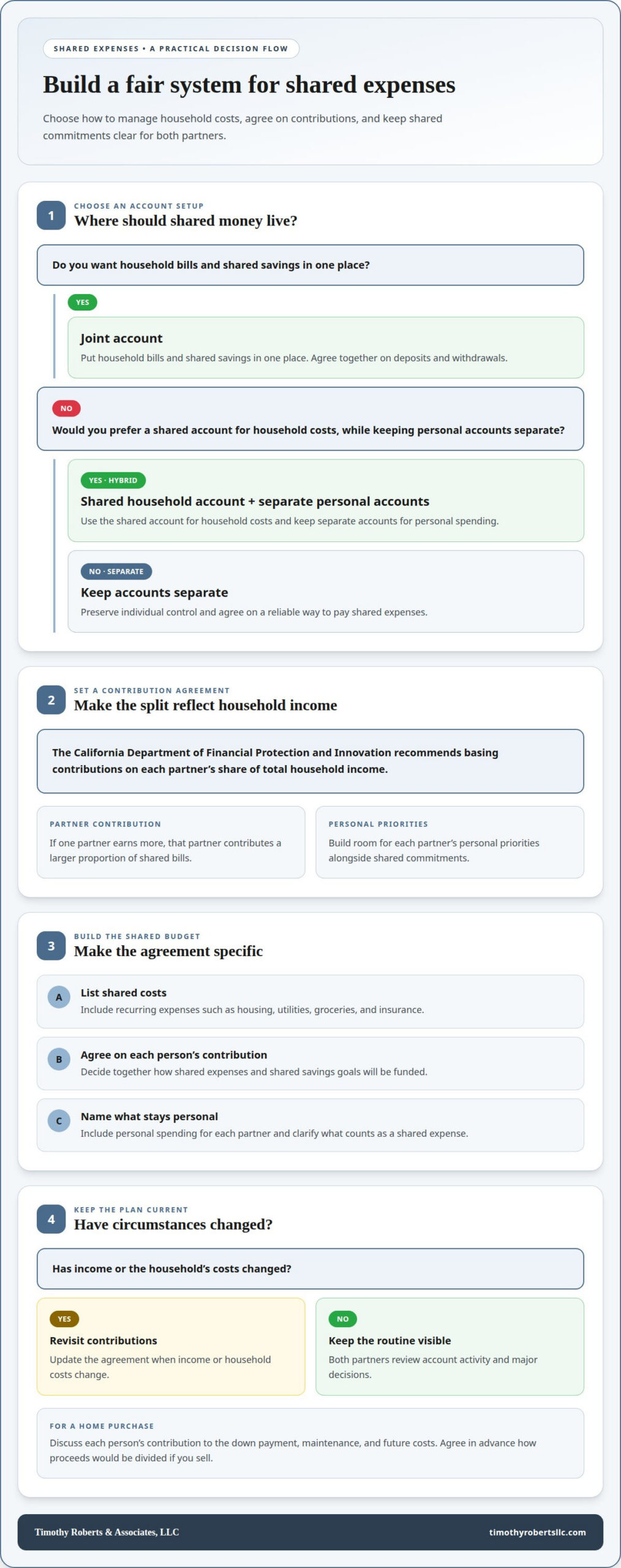
A fair split reflects both partners’ income and the expenses they share. The California Department of Financial Protection and Innovation recommends basing contributions on each partner’s share of total household income. For example, if one spouse earns more, they contribute a larger proportion of shared bills, while both retain room for personal priorities. Revisit the agreement when income or household costs change.
Couples can manage shared costs through joint, separate, or hybrid accounts. A joint account puts household bills and shared savings in one place, but requires agreement on deposits and withdrawals. Separate accounts preserve individual control, though partners need a reliable way to pay shared expenses. A hybrid approach uses a shared account for household costs and separate accounts for personal spending.
To build a shared budget, list recurring expenses such as housing, utilities, groceries, and insurance, then agree on each person’s contribution. Include shared savings goals and personal spending for each partner. Set the arrangement together rather than treating one person’s preferences as the default. Discussing what counts as a shared expense can prevent small purchases from becoming larger disagreements.
Keep the system practical. One partner can handle routine bill payments, while both review account activity and major decisions. Set a regular time to discuss upcoming costs, such as a home repair or planned trip, and update contributions if income changes. Make sure both partners know which bills come from shared funds and which remain separate.
Shared long-term planning also calls for clear agreements. For a home purchase, discuss each person’s contribution to the down payment, maintenance, and future costs. Agree in advance how you would divide the proceeds if you sell. Financial planning for couples with different money habits works best when shared commitments and individual autonomy are both reflected in the budget.
4. Understanding different spending habits
Different spending habits often reflect different priorities, not a lack of commitment. One partner may value a growing savings balance; the other may prefer spending on shared experiences. A survey found that 34% of couples disagreed about whether they were spenders or savers. Start by describing what each habit provides, then identify which household expenses and goals need joint decisions.
Set clear limits for family spending by separating essential costs from optional purchases. For example, agree that routine groceries fit the monthly household budget, while larger discretionary purchases are discussed first. Decide which purchases could affect shared savings or bills, and leave room for personal spending that doesn’t disrupt those commitments. A shared rule is more useful than expecting one partner to adopt the other’s style.
Plan upcoming expenses before they become urgent. During a monthly review, list expected costs such as school supplies, travel, or home maintenance, then decide what to fund and when. If an unusually large bill comes up, adjust optional spending or the timing of another goal together. This keeps the conversation focused on the situation and available choices, rather than blame over a single purchase.
Silence can leave frustration unresolved: 24% of couples said they felt frustrated by a partner’s money habits but let the issue go to keep the peace. Replace avoidance with a specific conversation. Each partner can name one spending choice they value and one household concern they want addressed. Then agree on a limit or review point and revisit it if income, priorities, or expenses change.
A financial advisor can help couples turn conflicting preferences into a coordinated household strategy. If spending disagreements keep disrupting shared goals, discuss a tailored financial plan that reflects both partners’ priorities.
Timothy Roberts & Associates: Financial Planning
Timothy Roberts & Associates can help couples turn different money habits into a coordinated financial strategy. When conversations about saving, investing, or retirement feel difficult to translate into decisions, a personalized financial plan can connect each partner’s priorities with shared long-term goals.
Financial planning can bring together retirement income, investment portfolio management, and estate and legacy planning. This broader view helps couples consider how today’s choices relate to future income, investment decisions, and the legacy they want to create. Each partner’s goals and comfort with financial risk can inform the strategy.
If you’re ready to bring more structure to your shared financial decisions, contact Timothy Roberts & Associates to discuss financial planning.
Build a financial partnership that can grow
Different money habits don’t need to become a lasting source of tension. They can prompt useful conversations about what security, flexibility, and opportunity mean to each of you. Financial planning for couples with different money habits starts with shared decision-making, while leaving room for each partner’s perspective to shape the plan.
Consider the next change your household may face, such as a career shift, a move, or a new family responsibility. Discuss how you want to approach that decision before it arrives. Agreeing on principles now can make future choices clearer, even when circumstances or priorities change. The goal isn’t perfect agreement on every purchase; it’s a partnership where both people understand the direction and can raise concerns early.
When you’re ready to bring your financial priorities into a more coordinated strategy, contact Timothy Roberts & Associates, LLC. A thoughtful next conversation can help you move forward with greater clarity and shared purpose.
Frequently Asked Questions
How can a couple be financially successful?
A couple can build financial success through shared decisions, not identical preferences. Agree on what financial stability means to each partner, then clarify which choices need mutual consent. For example, each person might handle everyday personal purchases independently, while a career break or major home commitment prompts a joint review. Revisit these agreements as priorities and circumstances evolve.
How can couples discuss different money habits without conflict?
Choose a calm time to talk instead of raising concerns during a purchase or bill dispute. Describe the effect of a specific choice and what you need without labeling your partner as careless or controlling. Listen to the other person’s reasons before proposing a change. If either of you feels overwhelmed, pause and return to the topic when you can both focus.
How should couples divide household expenses fairly when incomes differ?
One approach is to calculate each partner’s share of combined household income and use those proportions to divide shared expenses. Keep individual obligations separate if that fits your agreement. For instance, partners might share housing and utility costs proportionally while paying personal subscriptions separately. Reassess the method if income changes, one partner takes unpaid leave, or household responsibilities shift.
What financial goals should couples prioritize together, such as emergency savings, debt payoff, and retirement?
Prioritize goals by urgency, potential consequences, and how they support household stability. A couple facing unpredictable expenses may first build accessible reserves, while high-cost debt may call for focused repayment. Keep retirement contributions in the conversation so near-term demands don’t continually displace future needs. Agree on a sequence, then adjust it as balances, income, and obligations change.
What are effective ways to resolve financial disagreements and set spending limits?
Turn a disagreement into a specific decision: identify the spending category, explain the concern, and agree on a limit or approval rule. For example, routine household purchases could follow the budget, while a large nonessential purchase prompts discussion first. If you can’t agree immediately, set a time to revisit the choice and compare it with shared priorities.
How often should couples review their budget and financial goals?
A monthly review gives couples a regular opportunity to compare planned and actual spending, confirm upcoming obligations, and adjust transfers toward savings or debt. A brief check-in can address routine changes, while a fuller conversation can consider progress and trade-offs. Revisit the plan sooner after a job change, a major expense, or a shift in family responsibilities.
