What if the best response to a market decline isn’t an immediate trade, but a clearer plan? Headlines and portfolio drops can create pressure to act, especially when retirement income or near-term spending is involved. For households navigating uncertain economic landscapes, managing market volatility effectively starts with asking when you’ll need the money and how much fluctuation your plan can withstand.
A decline can be unsettling without automatically representing a permanent loss. Whether staying invested fits your situation depends on your goals, time horizon, liquidity needs, and capacity for risk.
This guide explains how to assess those factors and make deliberate choices. Personalized fiduciary planning can connect portfolio decisions to income needs and long-term goals. At Timothy Roberts & Associates, LLC, “Your Interest is Our Only Interest.”
Key Takeaways
- Market price changes are not automatically permanent losses. Separate short-term movement from what your long-term goals require.
- Assess both your comfort with investment losses and your financial capacity to absorb them, especially if you expect withdrawals soon.
- Managing market volatility michigan starts with a deliberate sequence: pause, revisit goals, review liquidity, assess portfolio fit, then decide.
- Staying invested isn’t automatically the right choice. Compare any adjustment with your circumstances and written plan, not headlines alone.
- Fiduciary financial planning can help connect investment decisions to retirement income needs and broader financial goals.
What market volatility means for Michigan investors, and what it does not
Market volatility is the variation in investment prices over time. It describes movement, not the final outcome of an investment. A falling account balance can feel like a clear verdict, but a change in market value alone doesn’t tell you whether an investment loss is permanent or how a portfolio fits your goals. For a foundational overview of price fluctuations and how volatility is measured, see Understanding Market Volatility.
Uncertainty can feel especially pressing when headlines emphasize market drops, political events, or economic concerns. Frequent alerts may make every move seem like a signal to act. But volatility is a market condition, not an individual recommendation to buy, sell, or hold. That decision depends on your circumstances and financial plan.
For a related perspective on balancing investment income and growth, watch this video from Morningstar, Inc.:
Why market swings can feel more urgent than they are
A price change is observable: an investment is worth more or less at a particular moment. A prediction is different: it assumes what prices, interest rates, or political events will do next. Headlines and notifications often pair the first with confident interpretations of the second. Separating what has happened from what someone expects may help you consider whether new information changes your plan, rather than treating every update as an instruction.
For example, a portfolio decline may matter differently to someone planning a near-term withdrawal than to someone investing toward a distant goal. The movement is real, but its implications depend on the investor’s needs and time horizon. Managing market volatility michigan means examining that context instead of trying to predict the timing or speed of a recovery.
What Michigan investors should take from market history
MERS of Michigan offers an educational perspective on market declines and investor reactions. Its historical discussion notes that past downturns have been followed by recoveries. That history can offer context when a decline makes the future feel unusually uncertain, but it cannot establish when, how quickly, or whether a future recovery will occur.
Use historical examples as perspective, not as a forecast or assurance. They can remind investors that a downturn is one part of market history, while leaving the next outcome unknown. A disciplined response starts with what you can assess: your goals, available resources, and the role each investment serves. From there, managing market volatility michigan becomes a planning question, not a reaction to the loudest headline.
Why volatility affects portfolios differently: goals, time horizon, and withdrawals
The same market decline can be a temporary setback for one investor and a practical concern for another. A person saving toward a distant goal may have time to weather price fluctuations, while someone relying on investments for near-term spending may need to consider how withdrawals interact with those fluctuations. The difference isn’t just the size of the decline. It’s the role the money serves and when it may be needed.
Investment decisions should reflect your time horizon, income needs, and financial capacity to absorb risk, not market movement alone.
How time horizon changes the decision
Time horizon is the period before you expect to use money for a goal. Funds intended for a future objective may have a different planning role from assets that support an upcoming expense or regular retirement income. A longer horizon can give a plan more room to accommodate short-term changes, but it doesn’t make volatility irrelevant. Near-term needs may call for closer attention to accessible funds and the timing of withdrawals.
Consider two hypothetical investors facing the same downturn. One is continuing to invest for a distant goal and doesn’t expect to use those assets soon. The other plans to draw from a portfolio for living expenses. The market move is identical, but their cash-flow needs and ability to wait differ. Neither scenario points to a universal allocation. Instead, they show why a plan should reflect individual goals and liquidity needs.
Why withdrawals and sequence risk matter
Sequence-of-returns risk is the effect that the order of investment returns can have on a portfolio while withdrawals are being made. A portfolio experiencing a decline while an investor takes withdrawals may be affected differently from one facing the same price movement without withdrawals. Selling assets to meet spending needs during a downturn can reduce the amount left invested to participate in any later gains. The impact depends on the portfolio, withdrawal pattern, and subsequent returns, so no single example predicts an individual outcome.
This is why the distinction between risk tolerance and risk capacity matters. Risk tolerance describes your emotional comfort with investment losses and uncertainty. Risk capacity describes your financial ability to absorb them while still meeting planned needs. Someone may feel comfortable with market swings but have limited capacity if they need portfolio income soon. Another investor may have greater financial flexibility but still find declines emotionally difficult. A thoughtful plan takes both into account.
For Michigan households, managing market volatility michigan means connecting investment choices to the timing and purpose of withdrawals, rather than relying on a generic rule. If your income needs or time horizon have changed, a personalized financial planning conversation can help you review how your portfolio fits those circumstances. Retirement income planning can be part of that broader assessment.
Does staying invested always make sense during market volatility?
No. Staying invested isn’t a substitute for reviewing a plan that no longer fits. But selling because headlines feel alarming can turn a temporary reaction into a decision with lasting consequences. The more useful question is whether your goals, spending needs, or financial circumstances have changed, and whether your current strategy still reflects them.
Leaving the market can also create a difficult second decision: when to return. If prices rise after you sell, waiting for a clearer signal may mean missing part of the rebound. Yet remaining invested doesn’t prevent losses, and it isn’t automatically right for every investor. A considered adjustment may make sense when it responds to changed circumstances rather than an attempt to predict the next market move.
When a market reaction may undermine a long-term plan
Fear-driven selling can lock in a loss by converting a decline in market value into a completed sale at that price. It may also disrupt a strategy designed around long-term goals. Re-entering can be challenging because markets don’t provide a reliable signal that conditions are calm or that prices have reached a low point. None of this means every investor should hold the same investments through every downturn. It means decisions deserve context.
When it may be time to review the plan
A review is appropriate when the plan’s assumptions may have shifted. Changed spending needs, a new income source, revised goals, or a different level of comfort with risk can all affect whether the existing approach remains suitable. That’s different from trying to forecast whether markets will rise or fall next. An adjustment should account for your overall financial picture, including the purpose and timing of withdrawals, not headlines alone.
The comparison below can help distinguish a reaction from a deliberate review:
| Approach | What it looks like | Questions to consider |
|---|---|---|
| Reactive action | Selling after alarming news, without checking how the decision affects the wider plan. | Am I responding to a changed need, or to fear about what might happen next? What is my plan for re-entering? |
| Planned review | Reassessing investments after a change in goals, income, spending needs, or risk comfort. | Does my strategy still support my goals and expected withdrawals? What trade-offs would an adjustment create? |
For managing market volatility michigan, the distinction matters: a portfolio change should have a reason tied to your needs, not simply to the direction of the latest headline. A fiduciary planning conversation can help connect investment decisions with your broader goals and circumstances. Explore personalized financial planning as one way to examine that fit.
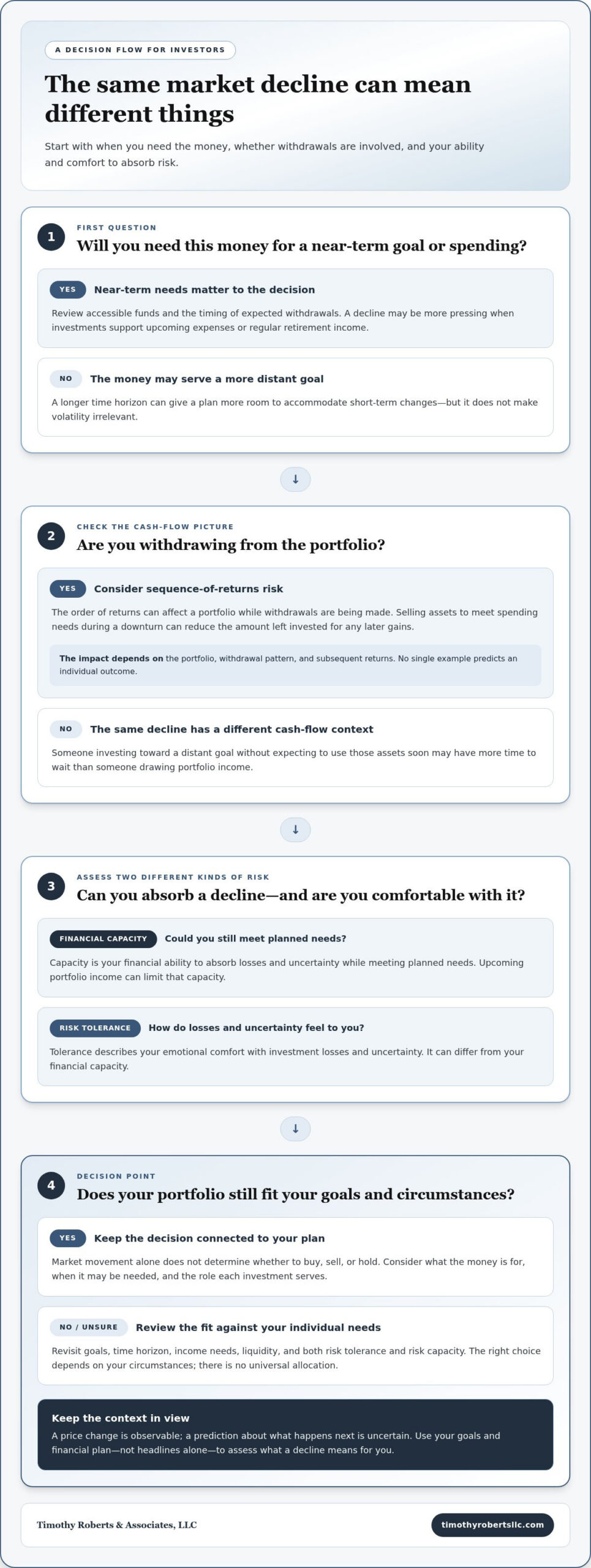
A practical market-volatility response plan for Michigan investors
A written sequence can help turn market uncertainty into a considered decision. Instead of trying to predict the next move, compare your choices with the goals and assumptions already set out in your financial plan. If circumstances have changed, use that as a reason to review the plan, not to react automatically to a headline.
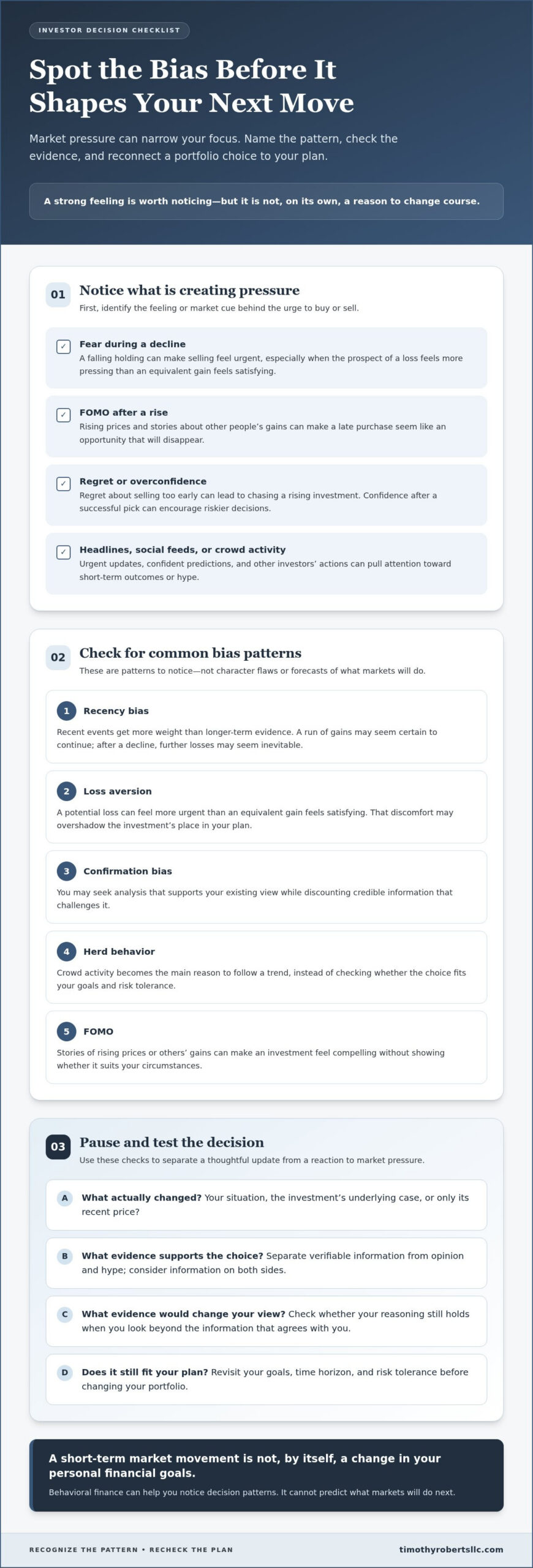
- Pause. Give yourself time to distinguish a pressing financial need from the understandable urge to act during a sharp market move. Avoid making an investment decision based only on a notification or news cycle.
- Revisit your goals. Identify what each part of your portfolio is intended to support and whether those priorities have shifted. A new expense or revised retirement goal may matter more than the market’s latest direction.
- Review liquidity. Consider what funds you may need for upcoming spending and when you expect to use them. This helps clarify whether a potential portfolio change is connected to cash-flow needs or to an assumption about future prices.
- Assess portfolio fit. Compare your investments with your time horizon, comfort with losses, and financial capacity to absorb them. Diversification spreads exposure across investments, but it can’t guarantee against losses or ensure a positive return.
- Decide deliberately. If an adjustment is warranted, understand how it supports your goals and what trade-offs it may involve. If your circumstances haven’t changed, consider whether a change would still align with your written plan.
Questions to ask before changing investments
Use these questions to separate facts from forecasts: Has the goal or time horizon changed? Are expected withdrawals different? Does the portfolio still reflect both your comfort with risk and your financial capacity? Which parts of the decision rely on information you know, and which depend on a guess about what markets will do next? The answers can help identify whether you’re responding to a changed plan or reacting to uncertainty.
Keep decisions connected to long-term goals
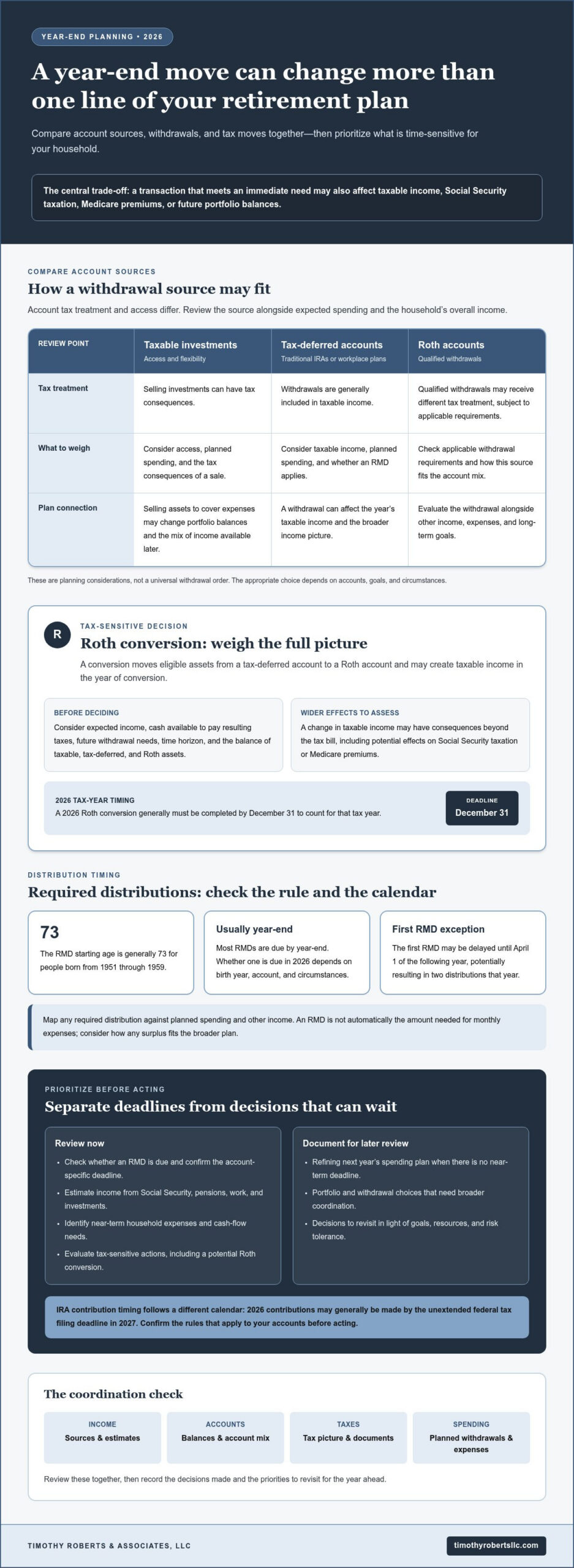
Review your financial plan when meaningful changes arise in goals, income, spending, or other circumstances. There’s no single review schedule that fits every investor. A review can assess whether your investments still serve their intended roles and whether diversification remains consistent with your strategy. Rebalancing may bring a portfolio back toward its planned mix, but it doesn’t remove investment risk or assure a particular result.
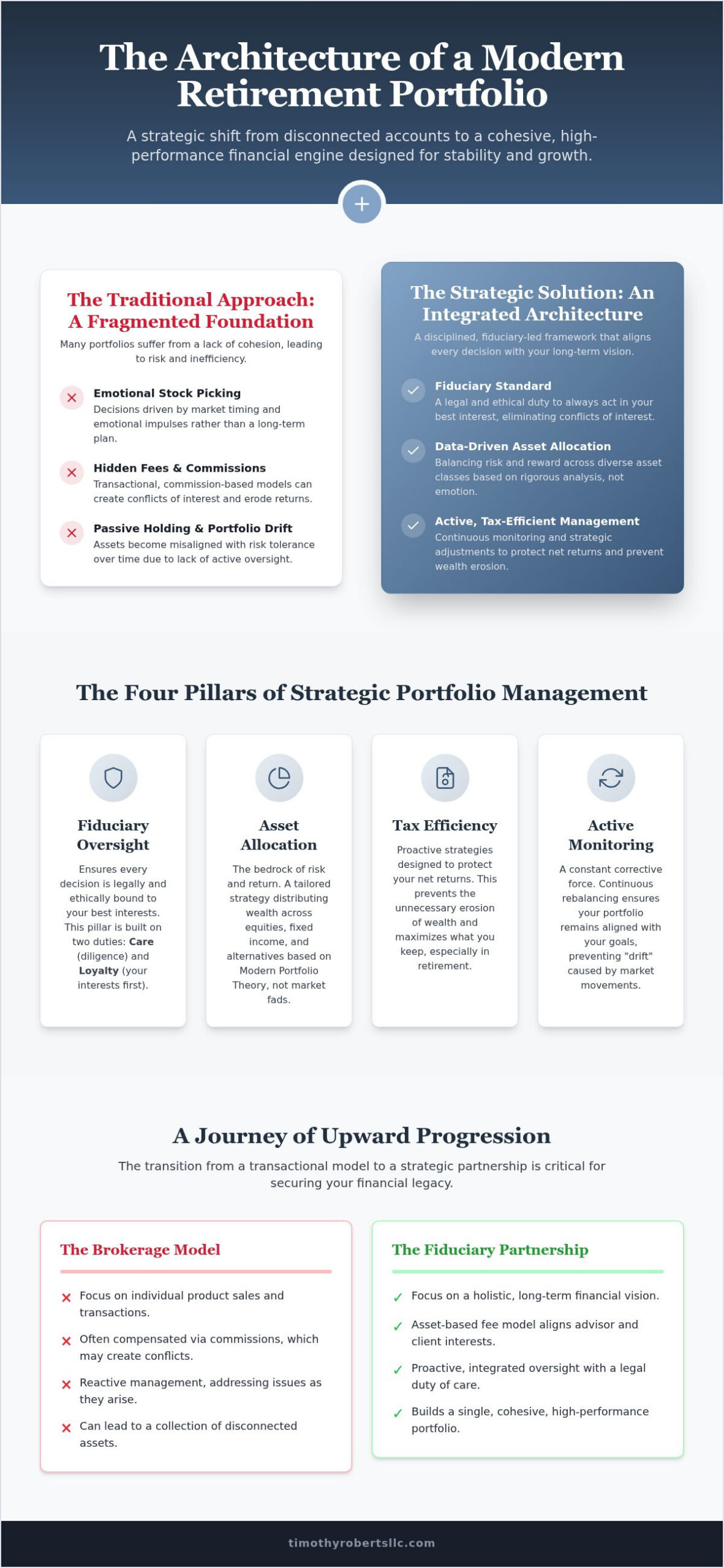
For an additional perspective on how portfolio management connects investment choices to a broader wealth strategy, explore this portfolio management guide. The location in that guide doesn’t change the central principle: your decisions should reflect your own goals and circumstances.
Managing market volatility michigan is less about forecasting every swing and more about following a process that brings goals, liquidity, and portfolio fit into the same conversation. For personalized fiduciary guidance grounded in your financial picture, explore fiduciary financial planning.
How fiduciary financial planning can support decisions through volatility
Market decisions make more sense when viewed as part of a complete financial picture. Fiduciary financial planning can connect investment choices with retirement income needs, long-term goals, and broader considerations, including tax planning. That perspective helps frame the question not as “What will the market do next?” but as “How does this choice fit the plan I’m building?”
Timothy Roberts & Associates, LLC provides fee-only financial planning, with no commissions. Its advisors are legally bound to act in clients’ best interests under the fiduciary standard. The firm’s philosophy is Your Interest is Our Only Interest. Fiduciary guidance can support a careful evaluation of options. It doesn’t promise investment returns or prevent losses.
What a personalized planning conversation can address
A personalized discussion can consider your goals, time horizon, income needs, and comfort with investment risk together. For example, an investor approaching retirement may want to examine how portfolio decisions relate to planned withdrawals, while also considering other resources and goals. Investment portfolio management and retirement planning can help organize those decisions into a strategy tailored to the person, without promising a particular outcome.
Questions about the timing and structure of retirement income deserve particular attention because portfolio choices may interact with spending needs. A retirement income planning review can help connect income needs with retirement goals. The right approach depends on individual circumstances, and no planning process can assure a particular market result.
Managing market volatility michigan can involve decisions across several parts of a plan, not just investment selection. A fiduciary conversation can help clarify which choices relate to your stated goals, which reflect a change in circumstances, and which may be reactions to uncertainty. It can also make trade-offs more visible, so you can consider decisions with greater context.
Disclosures readers need before taking action
Financial planning should be considered within the scope of your individual circumstances. Tax-related matters may call for guidance from a tax professional, and legal matters from a legal professional. The information on this site is not a substitute for advice tailored to your situation.
This site is published for residents of the United States only. Not all of the products and services referenced on this site may be available in every state and through every advisor listed.
The information in this material is not intended as tax or legal advice. Please consult legal or tax professionals for specific information regarding your individual situation.
Securities offered through Cetera Financial Specialists LLC… Advisory services offered through Cetera Investment Advisers LLC. Cetera entities are under separate ownership from any other named entity.
For a thoughtful conversation about how your investment decisions relate to your wider goals, discuss your financial planning needs.
Make your next decision with greater clarity
A market outlook can change quickly. Your financial plan should give you a steadier reference point, one that can be revisited as your priorities, income needs, and circumstances evolve. That process doesn’t require predicting every turn. It means making choices with intention and understanding how they serve the future you’re working toward.
For investors managing market volatility michigan, a personalized planning conversation can help turn uncertainty into a practical next step. Timothy Roberts & Associates, LLC brings more than 30 years of financial-management experience to its work. Its fiduciary approach is centered on clients’ best interests, with the guiding philosophy, Your Interest is Our Only Interest.
If you’re ready to consider how your investment decisions fit your broader financial goals, start a conversation about your financial plan.
Frequently Asked Questions
Is market volatility the same as investment risk?
No. Volatility describes how much an investment’s price moves, while investment risk includes a wider range of uncertainties that could affect your goals. For example, an investment may fluctuate in value, while inflation can reduce what your savings buy over time. Liquidity also matters: an asset may be harder to sell when you need cash. Consider the types of risk that apply to your holdings, not just recent price changes.
What is sequence-of-returns risk in retirement?
It’s the way the order of investment returns can affect retirement savings when withdrawals are underway. Imagine two hypothetical portfolios with the same returns over time, but one experiences losses earlier while its owner is withdrawing money. That account may have less capital remaining to participate in later gains. The specific effect depends on returns, withdrawals, and the portfolio, so reviewing income needs alongside investments can help clarify your exposure.
Should I stop contributing to my retirement account when markets fall?
Not automatically. Consider whether contributions fit your budget, near-term cash needs, and long-term goals before changing them. If your account allows ongoing contributions, investing during a decline may purchase more shares or units for the same contribution, though it doesn’t guarantee a profit or prevent losses. Review any employer contribution terms that apply to your plan, and weigh them alongside liquidity needs and your broader financial priorities.
Can diversification prevent losses during market volatility?
No. Diversification spreads investments across different holdings or types of assets, which can reduce reliance on a single investment or market segment. It can’t eliminate risk or ensure that some holdings will rise when others fall. For instance, investments that seem different may respond similarly to economic pressures. Consider whether your portfolio is concentrated in a company, industry, or asset type, and review how that exposure relates to your goals.
Do bonds also fluctuate when the stock market is volatile?
Yes. Bond prices can change for reasons such as interest-rate movements, the issuer’s perceived ability to repay, and changing expectations for inflation. A bond’s maturity and credit quality can also affect how its value responds. Bonds don’t necessarily move in the same direction or by the same amount as stocks, but they aren’t free from price changes. Review the role of bond holdings within your overall plan rather than treating them as risk-free.
How often should I review my investments during a volatile market?
There isn’t one review schedule that suits everyone. Consider reviewing your plan at intervals that fit your circumstances and when a meaningful change occurs, such as a new spending need, income source, or goal. Daily price checks can make short-term fluctuations feel more urgent without adding useful context. For managing market volatility michigan, focus reviews on whether your investments still support your objectives and expected cash needs, not on predicting the next move.