What if the most useful first step in retirement planning isn’t choosing a retirement date, but imagining the life you want to share? Creating a joint retirement vision with your partner starts with that conversation. Before account balances and projections can guide decisions, you need a clearer picture of what you want retirement to make possible for each of you.
Your ideas may not line up perfectly. One of you might be ready to leave work sooner, while the other prefers a gradual transition. You may picture different homes, routines, or spending priorities. Those differences aren’t a reason to avoid planning. They’re a chance to understand what matters to each person and identify trade-offs worth exploring.
This guide will help you describe a retirement that feels meaningful to both of you, surface priorities and unanswered questions, and turn shared goals into a coordinated planning conversation. You’ll explore how lifestyle choices connect with retirement income, investments, taxes, and legacy considerations, so financial decisions can support the future you’re building together.
Key Takeaways
- Think of retirement vision as a shared direction, not a fixed script that requires identical preferences.
- Use a guided conversation to uncover what matters behind each partner’s hopes and preferences.
- Compare shared goals, individual priorities, and open questions to identify workable trade-offs.
- Creating a joint retirement vision with your partner can turn lifestyle priorities into practical planning questions.
- Bring income, investments, taxes, risk, and legacy considerations into one coordinated planning conversation.
Creating a Joint Retirement Vision Starts With the Life You Want to Live
Creating a joint retirement vision with your partner begins with a question that’s more personal than “How much do we need?” Start with how you hope to spend your time. One partner might imagine slow mornings, gardening, and frequent visits with family; the other may look forward to travel, volunteering, or continuing part-time work. These pictures don’t have to match in every detail to point toward a future you can shape together.
A shared vision is a direction, not a script. It can include common hopes, such as staying close to loved ones, alongside different routines and individual interests. Starting with lifestyle helps you identify what financial planning needs to support, rather than letting account balances or assumptions define retirement before you’ve considered what makes it meaningful.
For a broader introduction to how lifestyle and financial considerations intersect, see this Retirement Planning Overview. The following video also explores planning decisions couples may need to consider together.
A shared vision describes the life you want retirement planning to support; a retirement income plan is the financial strategy designed to help fund it. The two inform one another, but they aren’t interchangeable. You can begin describing what matters before resolving every question about income, investments, taxes, or timing.
What does a shared retirement vision include?
Consider the pace of life you each want, the activities that give your days meaning, the relationships you want to prioritize, and the independence each person needs. Then sort ideas into essentials and preferences. For example, regular time near family might feel essential, while a particular travel schedule may be flexible. A vision isn’t a promise that circumstances won’t change. Health, work, and family needs can shift, so revisit your shared direction as life evolves.
Why should partners begin with individual reflection?
Before discussing details together, each person can picture an ordinary weekday and a satisfying year in retirement. Write down hopes, concerns, and non-negotiables separately. What would you like more time for? What are you reluctant to leave behind? Private reflection gives each partner room to form considered answers before adjusting to the other’s preferences. When you compare notes, listen for the meaning beneath each idea and look for themes worth exploring together.
Keep the first conversation exploratory. If one person imagines living near family and the other wants to travel for part of each year, the ideas may be compatible rather than competing. Ask what each preference represents: connection, freedom, stability, or discovery. Those underlying values can guide later trade-offs and make financial planning more specific. The aim isn’t to settle every decision now. It’s to create a shared picture that can guide the next questions.
Use a Guided Conversation to Create Your Shared Retirement Vision
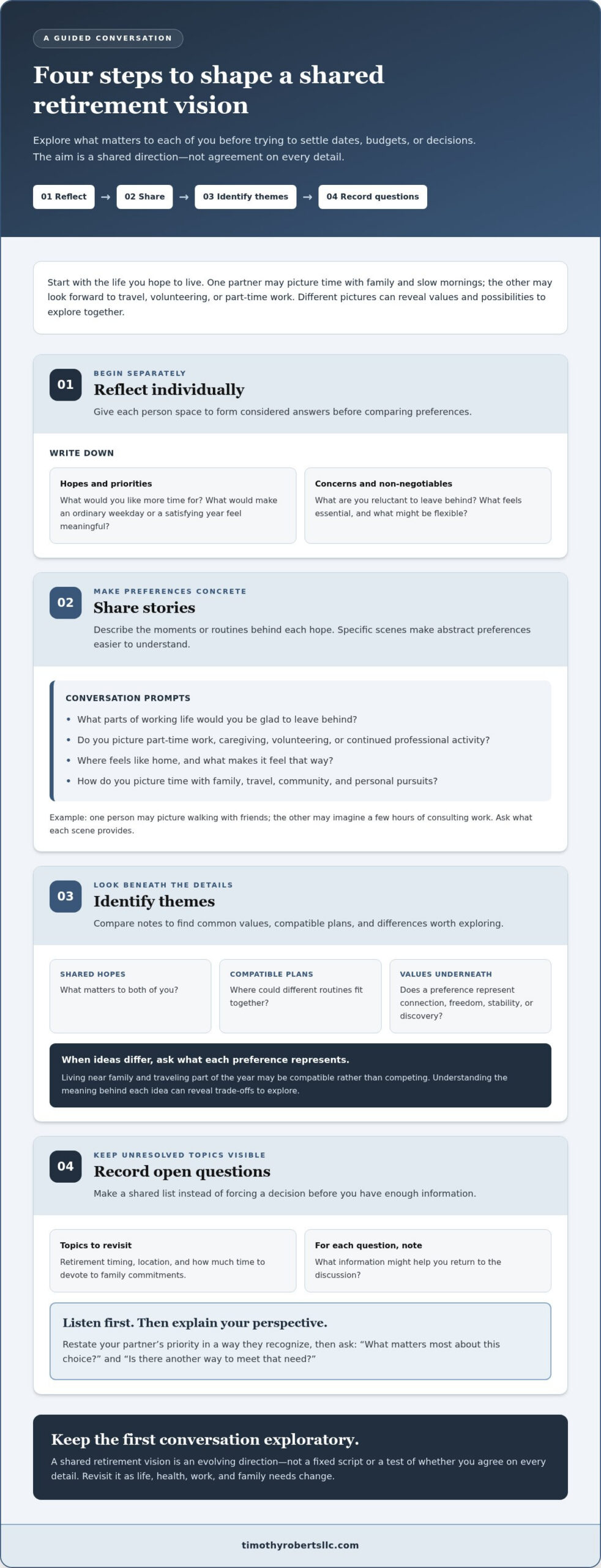
A thoughtful conversation doesn’t need to resolve every retirement question at once. Give it a clear rhythm: each partner reflects independently, shares specific examples, looks for common themes, then records questions that need more time or information. This structure keeps the discussion grounded in lived priorities rather than turning it into a debate over dates, budgets, or whose idea should come first.
Try this four-step sequence:
- Reflect individually. Write down hopes, concerns, and priorities before comparing answers.
- Share stories. Describe the moments or routines that make each hope meaningful.
- Identify themes. Look for shared values, compatible plans, and differences worth exploring.
- Record open questions. Keep unresolved topics visible instead of forcing a decision.
Which questions help each partner describe retirement?
Use open-ended prompts that invite detail, not a yes-or-no answer. Ask: What would you like more time to do? What parts of working life would you be glad to leave behind? Do you picture part-time work, caregiving, volunteering, or continued professional activity? Where feels like home, and what makes it feel that way? Explore time with family, travel, community involvement, and personal pursuits without assuming either partner wants to move.
Specific scenes can make abstract preferences easier to understand. One person might describe a weekday spent walking with friends; the other may picture a few hours of consulting work. Ask what each scene provides, such as connection, purpose, flexibility, or structure. Resources such as AARP Retirement Planning for Couples can also prompt discussion of shared planning considerations, including health care and long-term care.
How can couples listen when expectations differ?
When preferences diverge, pause before proposing a solution. First, restate your partner’s priority in a way they recognize: “You want to keep working part-time because you value the routine and purpose.” Then explain your own perspective. Follow with curious questions: What matters most about this choice? Is there another way to meet that need? This approach helps distinguish a fixed preference from the underlying value.
Keep a shared list of unresolved topics, such as retirement timing, location, or how much time to devote to family commitments. Add what information might help you revisit each question. Creating a joint retirement vision with your partner is an evolving conversation, not a test of whether you agree on every detail. To connect your priorities with income decisions, explore personalized retirement income planning.
Compare Retirement Priorities Without Turning Differences Into Conflict
Once each partner’s hopes are visible, compare them without treating every difference as a problem to solve. A joint retirement vision doesn’t require identical preferences, nor does it mean one person must give up a meaningful goal so the other can have theirs. Some priorities are shared; others can remain individual. The useful question is whether they can fit within the life you’re designing together.
Individual goals can have a place in a shared plan when both partners make room for them deliberately. A couple might value time together while also protecting space for separate pursuits. The distinction matters: a genuine conflict requires a decision or trade-off, while compatible preferences may simply need coordination.
Use a simple comparison to keep the discussion specific. Fill it in together, adding rows for the topics that matter to you:
| Category | Example to discuss | Next step |
|---|---|---|
| Shared priorities | Maintain close ties with family | Discuss what regular connection looks like |
| Individual priorities | One partner wants a weekly class; the other wants time for a personal project | Protect space for both interests |
| Open questions | Should retirement begin at the same time? | Explore timing and work-transition preferences |
| Possible trade-offs | Balance shared plans with individual activities | Identify options before settling on one |
How should partners discuss timing, work, and daily routines?
Compare preferred retirement timing without assuming your transitions must be simultaneous. One person may want to stop paid work while the other continues for a period. Discuss how work, caregiving, and household responsibilities could shape each person’s week. Clarify expectations about shared time versus time apart. Naming those assumptions early can prevent different ideas of “being retired together” from becoming a source of tension.
How can couples make room for different spending priorities?
Start by distinguishing shared needs from individual interests, such as a household project and a personal pursuit. Talk about the value behind each choice before weighing trade-offs. Then note which preferences may affect income needs, taxes, or account decisions. These are planning questions to examine together, not reasons to invent a budget before you understand the priorities it needs to reflect.
As you work through creating a joint retirement vision with your partner, label each item in your comparison: “aligned,” “can coexist,” or “needs more discussion.” This distinction keeps different preferences from being mistaken for conflict. For example, one partner’s interest in a regular community commitment and the other’s preference for quiet time may both fit if you agree on how to structure the week. Keep unresolved choices visible and revisit them as you learn how income, tax planning, and other financial considerations relate to your priorities.
Turn Your Retirement Vision Into Practical Planning Priorities
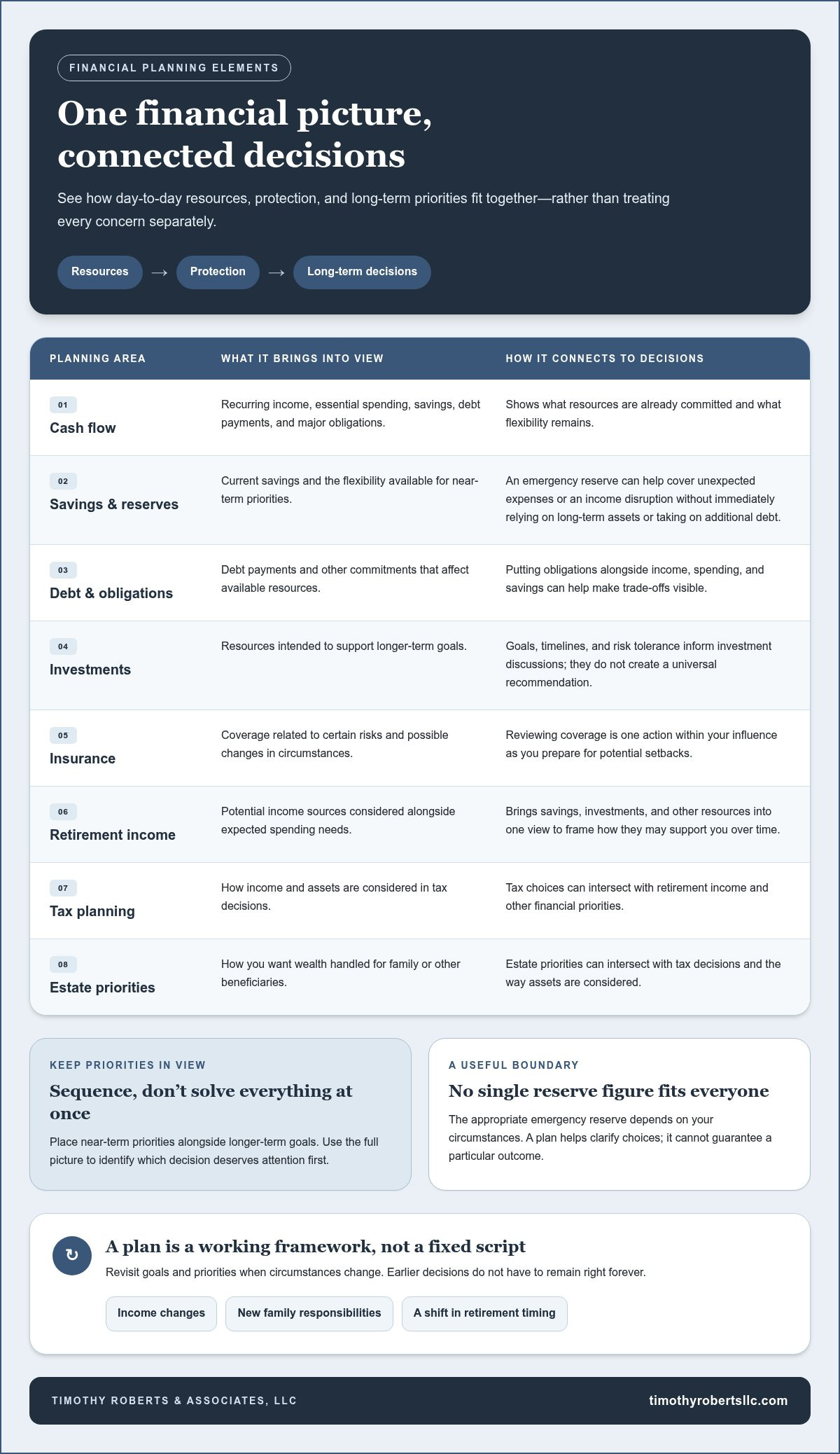
A retirement vision becomes useful when it points toward questions you can examine. If travel, time with family, or a gradual exit from work matters to you, consider what those priorities may mean for household income, investments, taxes, health care needs, and legacy goals. You don’t need every answer before you begin. The aim is to distinguish decisions you can make together now from questions that call for research or professional analysis.
Start by gathering information and identifying what you want to understand. A shared planning list might include:
- Income sources you expect to rely on and when each may begin.
- Retirement accounts and investments to review as part of the household picture.
- Expected expenses shaped by your preferred lifestyle, including health care considerations.
- Questions about work transitions, income timing, taxes, and investment decisions.
- Estate and legacy priorities you want reflected in your broader financial strategy.
Account and tax choices depend on individual circumstances and the rules in effect at the time. Treat them as planning questions, not assumptions to settle based on general guidance. Estate and legacy priorities also belong in the conversation. Financial planning can help clarify goals and considerations, but it is distinct from drafting legal documents.
Which financial questions should couples bring into planning?
Bring a clear inventory of income sources, retirement accounts, investments, and anticipated expenses, along with questions about timing. Connect each item to a priority: would a work transition change your income needs, or might a family commitment affect your plans? Tax and investment choices can influence how a shared strategy is implemented, so note where you need analysis rather than guessing at an answer.
For a deeper look at aligning lifestyle goals with income decisions, review this retirement income planning guide. Use it to frame the next set of questions.
How can couples keep the plan adaptable?
Agree on a regular time to revisit assumptions and priorities. You might also choose events that should prompt a conversation, such as a work change, a new caregiving responsibility, or a shift in family needs. Keep a simple record with three columns: decisions made, questions still open, and who will follow up. That makes the plan easier to revisit without treating it as a one-time exercise.
Creating a joint retirement vision with your partner can give financial decisions a shared point of reference while leaving room to adjust as circumstances change. A coordinated conversation can connect income planning with investments, taxes, risk, and legacy considerations. Timothy Roberts & Associates, LLC provides retirement income planning and broader financial planning to help you examine how those priorities fit together. Explore personalized retirement income planning as you consider your next steps.
Bring Your Shared Retirement Vision Into a Coordinated Planning Conversation
Your shared priorities can give a planning conversation a clear purpose. A fiduciary advisor can help connect what you want retirement to look like with personalized retirement income planning, organizing household goals, income questions, and investment considerations into a coherent picture. The advisor contributes analysis; you and your partner remain central to the decisions. The goal is to understand how choices relate, not to replace your judgment with a preset answer.
Context matters. A preference for retiring at different times may raise questions about income timing and investments. Health care needs, risk considerations, tax planning, and legacy priorities can also affect how a strategy is considered. Looking at these elements together helps surface trade-offs and questions for further analysis, without promising a particular result. Timothy Roberts & Associates, LLC’s fiduciary advisors develop personalized financial strategies, connecting retirement income planning with broader wealth considerations.
What can a retirement planning conversation help clarify?
A planning discussion can organize your household priorities alongside income sources, accounts, and investment considerations. It can also identify which decisions are ready for discussion and which depend on more information or analysis. Tax questions deserve the same context: a choice that seems straightforward in isolation may need to be considered alongside other parts of the household plan. Timothy Roberts & Associates, LLC offers tax advising to help couples include tax considerations in their planning conversations.
How can partners prepare for the next planning step?
Bring each partner’s written priorities, unresolved questions, and areas of uncertainty. A high-level overview of income sources, accounts, and existing planning documents can help frame the discussion. Both partners should have room to participate and say what they want the conversation to accomplish, whether that’s clarifying timing, understanding income needs, or connecting investment decisions with lifestyle goals.
- Share what matters most to each of you and where your priorities differ.
- Gather an overview of household income sources, accounts, and relevant planning materials.
- List questions about investments, taxes, risk, health care, or legacy priorities.
- Agree on what you hope to clarify and which topics may need further analysis.
Creating a joint retirement vision with your partner doesn’t require every detail to be settled before you seek guidance. A focused conversation can translate your shared direction into questions for personalized analysis while preserving your role in shaping the plan. Bring your goals and open questions to a retirement income planning conversation and take the next step together.
Let Your Shared Vision Guide the Next Step
Retirement plans don’t have to be completely settled before you move forward. Choose one open question you’d like to explore together, then bring it into a planning conversation. This keeps the process manageable and gives your priorities a practical path toward informed decisions.
Creating a joint retirement vision with your partner is an ongoing act of alignment. Your plans can adapt as your lives and priorities change, while conversation helps you stay connected to what you’re building together. Timothy Roberts & Associates, LLC brings more than 25 years of experience to personalized financial planning.
Bring your retirement priorities into a personalized planning conversation and take the next step with clarity. A shared future begins with a conversation, and you can shape it together, one decision at a time.
Frequently Asked Questions
How do you start a conversation about retirement with your partner?
Start with one question about the life you hope to have, not a decision about when to stop working. For example, ask, “What would you like an ordinary Tuesday to look like?” Each partner can answer without interruption, then reflect back what they heard. This makes creating a joint retirement vision with your partner feel like an exploration rather than a negotiation with an immediate winner or loser.
What if my partner and I want different things in retirement?
Different preferences don’t automatically mean your plans are incompatible. Identify what each preference is meant to provide, such as security, variety, purpose, or time alone. If one partner wants to keep working while the other hopes to travel, explore whether travel can happen during planned breaks or in stages. If a difference affects an important decision, record it and return to it with relevant information rather than treating it as a personal disagreement.
Should couples retire at the same time?
No, a couple doesn’t have to retire simultaneously. One partner might leave full-time work while the other continues working or transitions to a different schedule. Before choosing dates, consider how the change could affect household income, daily responsibilities, health care arrangements, and time together. A coordinated review can help you compare possible timelines and understand what each option would require, without assuming that matching retirement dates is the only way to plan as a couple.
How often should partners revisit their retirement vision?
Choose a recurring check-in that fits your planning needs, and revisit the conversation sooner if a major change shifts your assumptions. A job transition, a new family responsibility, or a change in health may affect priorities or timing. Keep a brief note of what has changed, what still feels important, and what needs follow-up. This makes each review purposeful and helps you adjust the plan without feeling that earlier decisions must remain fixed.
What financial information should couples discuss before retirement?
Discuss the household’s income sources, savings and investment accounts, expected expenses, debts, and any major upcoming commitments. Include costs that can vary, such as travel, home maintenance, or support for family members. You don’t need perfect records to begin, but use consistent, recent information where possible. A shared overview can reveal where estimates differ and help you identify which figures need clarification before making decisions about timing or spending.
Can a financial advisor help couples create a retirement plan together?
Yes. A financial advisor can help organize a couple’s priorities and examine how retirement income, investments, taxes, risk, and legacy goals relate. A fiduciary advisor who develops personalized strategies can help clarify options and trade-offs while leaving decisions with the couple. Timothy Roberts & Associates, LLC focuses on retirement income planning as its primary service, connecting lifestyle aims with financial analysis rather than assuming one approach fits every household.
How do Social Security and retirement accounts fit into a joint retirement vision?
They’re part of the household income picture, so consider them alongside each partner’s work timeline, savings, and expected needs. Discuss when each person may claim Social Security and how retirement accounts could support income over time, including tax considerations. Benefit and account rules can change and depend on individual circumstances. Before acting, review current information from authoritative sources and consider how the choices fit into a coordinated plan.