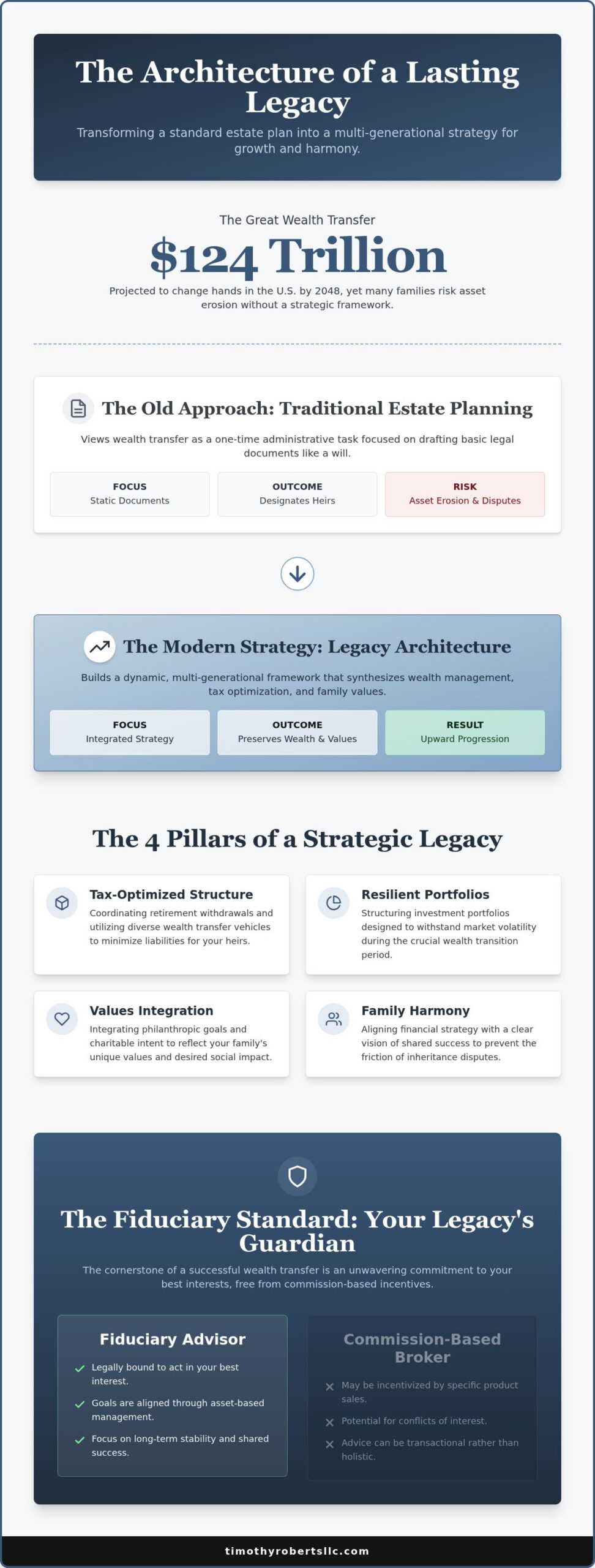
A legacy isn’t defined by the capital you leave behind, but by the strategic architecture of how that wealth is received. You recognize that simply transferring assets is a transaction, whereas funding a trust for grandchildren is an act of intentional stewardship. It’s natural to worry about a lump-sum inheritance being squandered or taxed at the 37% top trust income rate. You want to ensure your success serves as a foundation for their growth, not a source of future complication.
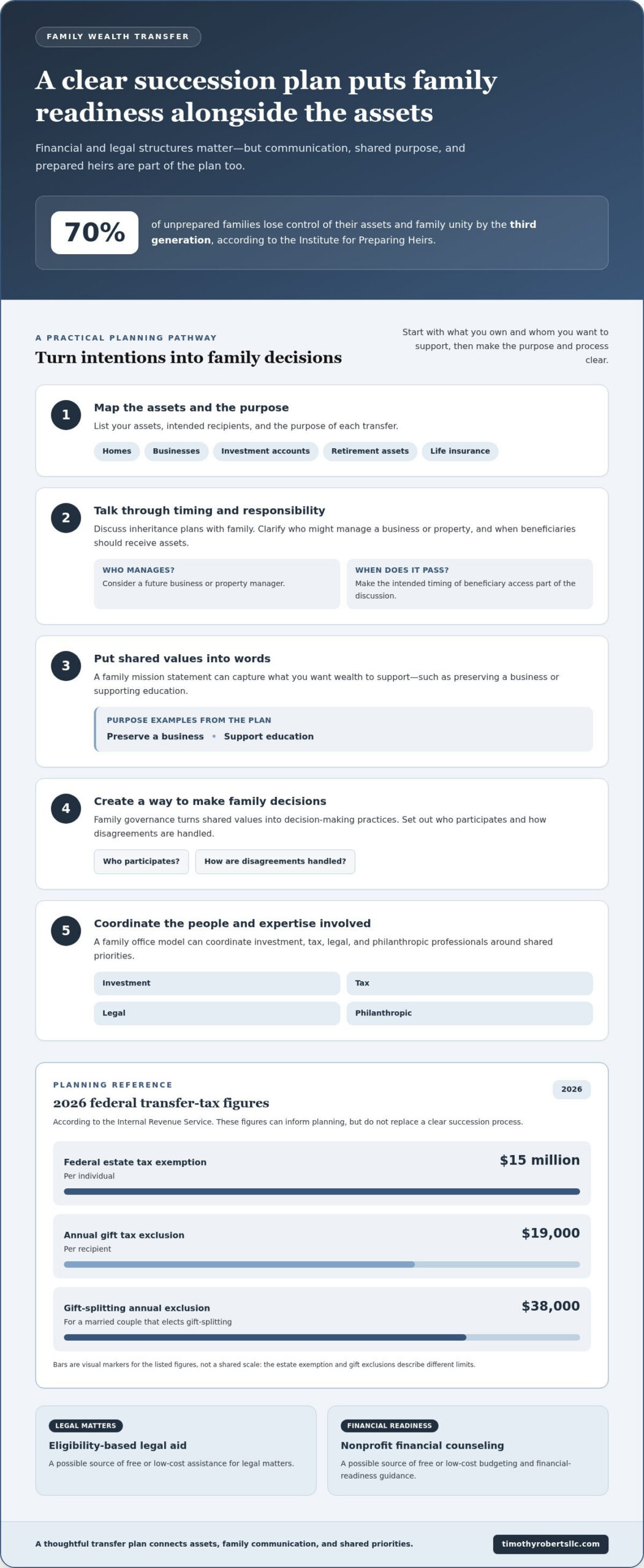
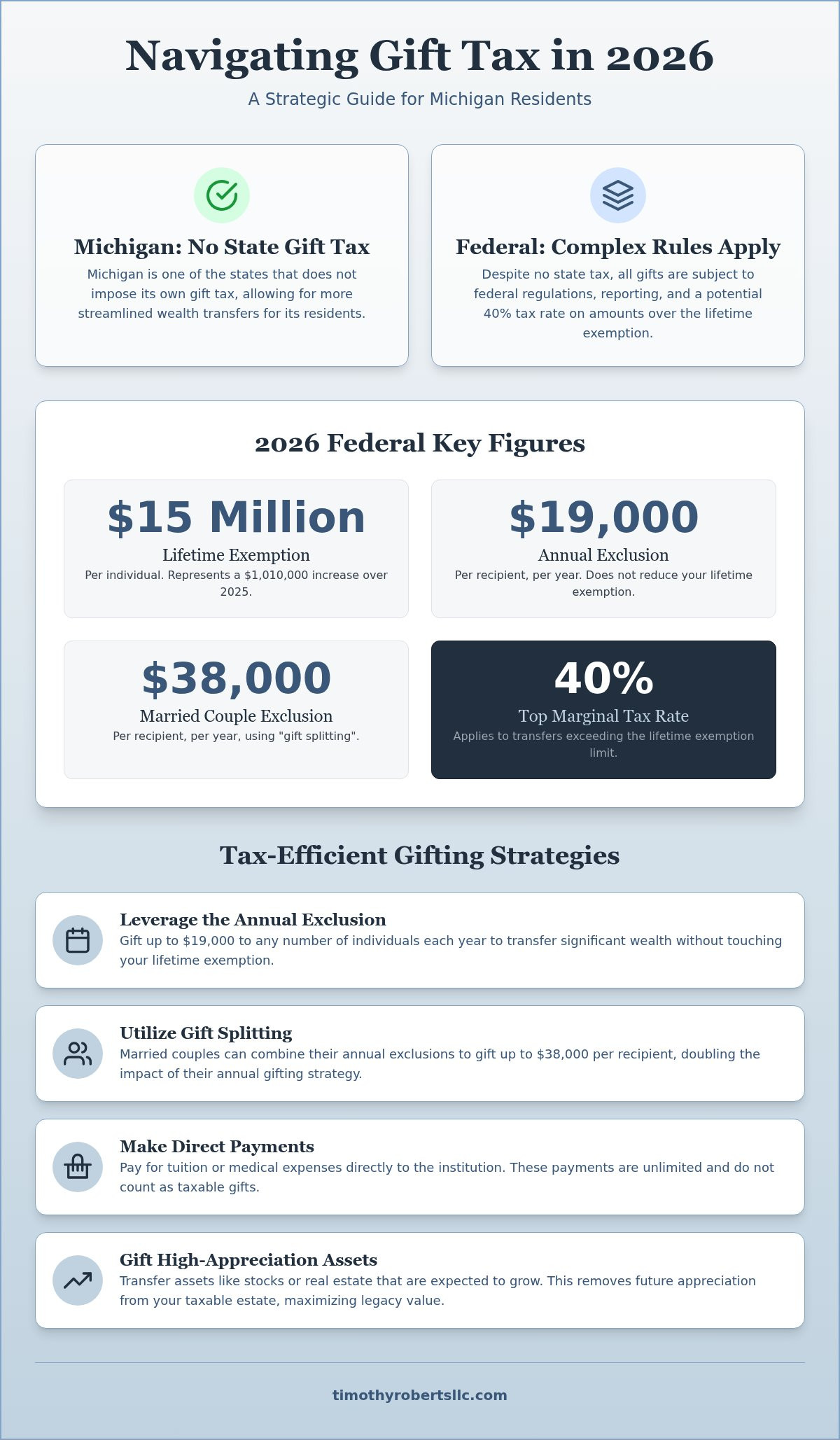
This guide provides a blueprint for orchestrating a transfer that preserves your vision while minimizing tax exposure. You’ll learn how to navigate the 2026 tax landscape, from utilizing the $19,000 annual gift exclusion to leveraging the $15 million lifetime exemption for maximum impact. We’ll explore how to integrate modern tools like the $5,000 annual Trump Accounts and front-loaded 529 plans, which allow for a $190,000 contribution for married couples, into a cohesive plan that protects assets from creditors and divorce. This is your roadmap for turning personal success into a permanent multi-generational advantage.
Key Takeaways
- Identify why a structured trust provides superior governance over UTMA/UGMA accounts by preventing premature access to significant capital.
- Master the tax-alpha of funding a trust for grandchildren using highly appreciative assets or life insurance to optimize the transfer of wealth.
- Compare the functional benefits of Dynasty Trusts and Irrevocable Life Insurance Trusts to create a legacy that spans multiple generations.
- Learn how to design incentive-based distribution milestones that encourage academic success, career progression, and financial maturity.
- Ensure your legacy objectives are balanced with your own financial security through rigorous stress-testing and strategic retirement income planning.
The Strategic Imperative: Why a Trust Surpasses Outright Gifting
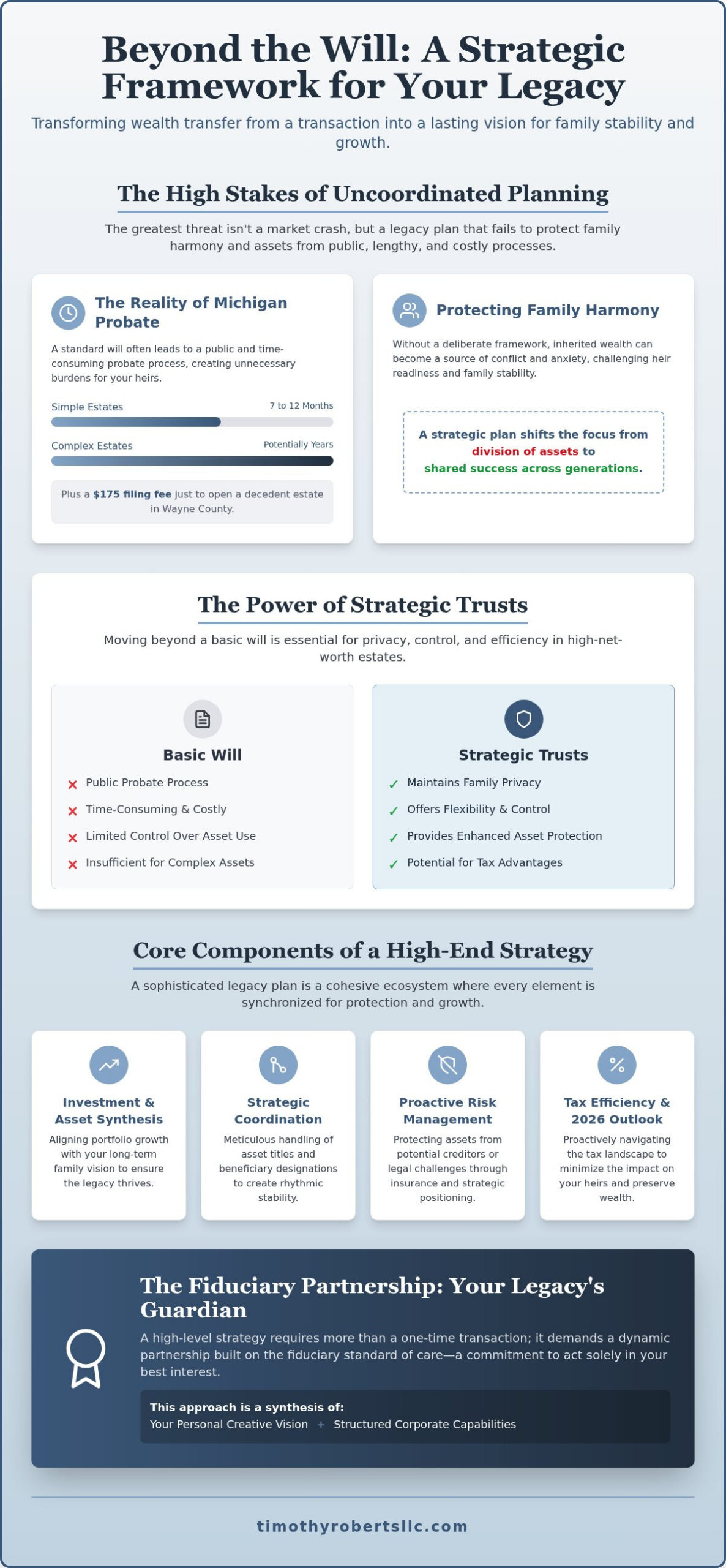
Legacy is not a static destination. It’s a dynamic progression. Funding a trust for grandchildren represents a sophisticated intervention that ensures your hard-earned capital serves as a foundation rather than a burden. While simple custodial accounts like UTMA or UGMA provide a basic framework, they often fail the test of long-term stewardship. These accounts typically grant beneficiaries full control at the age of majority, which is often 18 or 21. This creates a vulnerability that many families find unacceptable, as it lacks the nuanced control required for true wealth preservation.
To better understand this concept, watch this helpful video:
By shifting the focus from simple wealth transfer to intentional stewardship, you can architect a future that reflects your values. This approach moves beyond the mechanics of shifting money. It focuses on the strategic deployment of assets to foster growth, education, and stability across generations.
Asset Protection and Creditor Shielding
The true power of a trust lies in its ability to act as a fiduciary shield. By utilizing irrevocable structures, you effectively remove assets from the reach of external liabilities. This includes protection from future lawsuits, business failures, or divorce settlements that could otherwise deplete the family’s capital. A well-crafted dynasty trust ensures that assets remain within the family line for decades. Within these documents, a spendthrift clause serves as a vital safeguard. It prevents a grandchild from pledging their interest in the trust to creditors or selling it prematurely. Discretionary distributions further enhance this protection. By giving the trustee the power to decide when and how funds are released, the trust maintains its integrity even if a beneficiary faces personal or financial turmoil.
The Limitations of Outright Gifting
Direct gifts, while well-intentioned, often lead to “sudden wealth syndrome.” This occurs when a young adult receives a significant lump sum before they have developed the financial maturity to manage it. The result is frequently a rapid depletion of assets that took decades to build. Beyond behavioral risks, outright gifting carries technical downsides. Assets held directly in a grandchild’s name can severely limit their eligibility for financial aid through the FAFSA. By choosing a multi-generational wealth transfer strategy, you avoid these pitfalls. Funding a trust for grandchildren allows you to provide support for education or home purchases while keeping the core capital protected. It’s a method that values the longevity of the contribution over the immediacy of the gift.
Selecting the Optimal Trust Architecture for Your Legacy
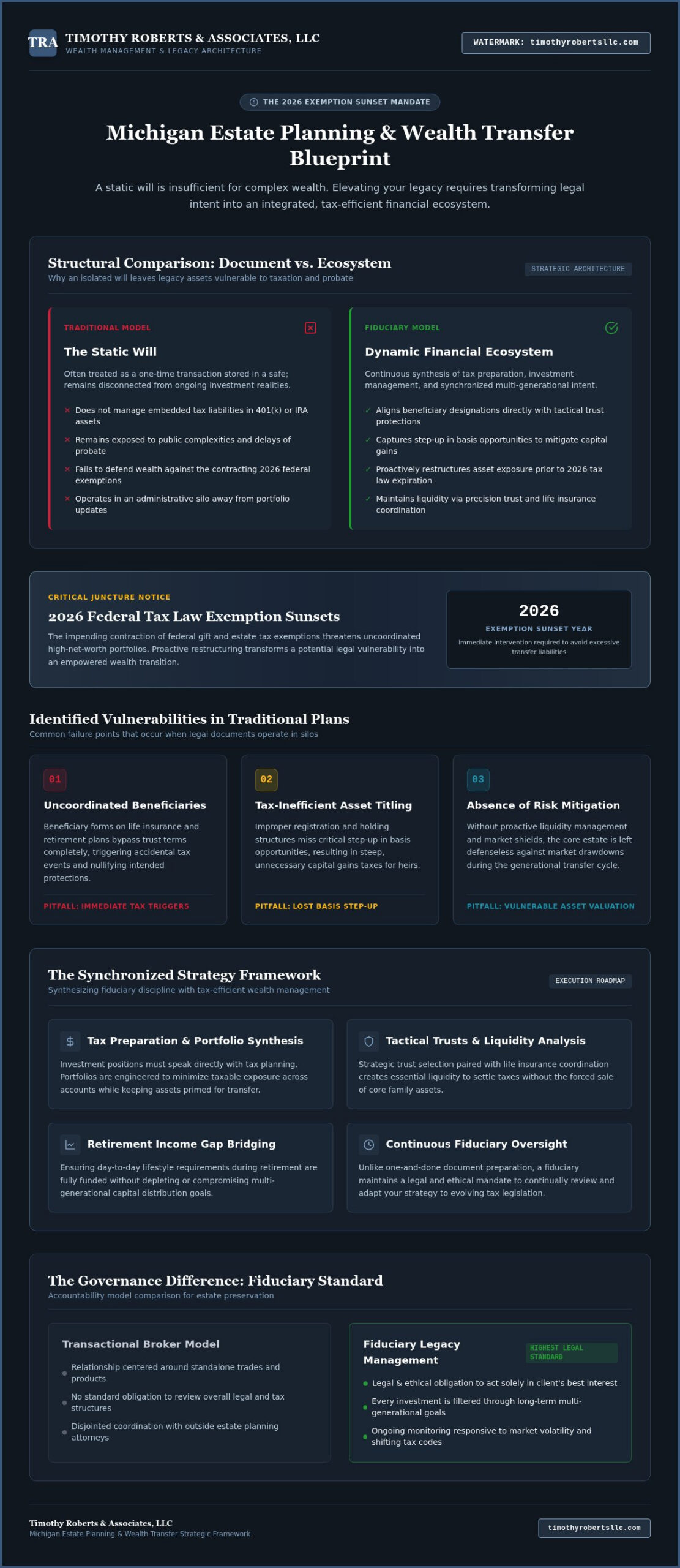
The architecture of your legacy dictates the endurance of your impact. Funding a trust for grandchildren isn’t a one-size-fits-all endeavor. It’s a choice between flexibility and permanence. A revocable living trust offers maximum agility during your lifetime, allowing you to alter terms as family dynamics shift. However, it provides no relief from federal estate taxes. Conversely, irrevocable structures serve as the cornerstone of sophisticated wealth transfer. They permanently remove assets from your taxable estate, ensuring more capital reaches the next generation without being diminished by the IRS.
Understanding how to set up a trust fund requires a deep dive into specialized vehicles like the 2503(c) Minor’s Trust or the Dynasty Trust. The 2503(c) is specifically designed for beneficiaries under 21, allowing gifts to qualify for the annual exclusion without complex notice requirements. For those looking further ahead, a Dynasty Trust can preserve wealth for multiple generations, potentially lasting centuries. To fund these irrevocable vehicles while utilizing the 2026 annual gift tax exclusion of $19,000, you’ll likely need Crummey Powers. This mechanism gives grandchildren a limited window to withdraw contributions, which technically qualifies the gift for the exclusion while keeping the bulk of the capital protected for the long term.
Navigating the Generation-Skipping Transfer Tax (GSTT)
The Generation-Skipping Transfer Tax (GSTT) represents a significant hurdle for high-net-worth families. This tax targets transfers that bypass your children to benefit your grandchildren directly. Without a strategic approach, these transfers can trigger a flat tax rate at the highest federal estate tax bracket. In 2026, the GSTT exemption aligns with the lifetime gift tax exemption of $15 million for single filers and $30 million for married couples. This provides a generous window to shield significant assets if you act before exemptions potentially sunset. One specific nuance is the Predeceased Parent Rule. If a grandchild’s parent is deceased at the time of the transfer, the GSTT doesn’t apply. The grandchild is treated as being in the generation of the parent, which simplifies the tax math considerably.
Revocable vs. Irrevocable: The Control vs. Tax-Efficiency Tradeoff
The tension between control and tax efficiency is a central theme in legacy design. Irrevocable trusts are generally the preferred choice for those seeking to minimize future estate tax liability. Once assets are transferred, they’re no longer part of your taxable estate. This allows all future appreciation to grow tax-free for your heirs. While you relinquish direct ownership, you can maintain indirect control. This is achieved through carefully drafted trust instructions that dictate exactly how and when funds are distributed. Another critical factor is the step-up in basis. Assets in a revocable trust receive a basis adjustment to fair market value upon your death, which can eliminate capital gains tax for your heirs. Irrevocable trusts often trade this benefit for estate tax exclusion. Choosing the right path involves a sophisticated estate planning assessment to determine which trade-off serves your family’s unique vision.
Funding Strategies: Tax-Efficient Asset Allocation
The success of funding a trust for grandchildren depends heavily on the character of the assets chosen for the transfer. While cash is the most straightforward option, it rarely provides the “tax-alpha” found in highly appreciative assets like growth stocks or private equity interests. By transferring low-basis assets into an irrevocable structure, you effectively freeze the value for estate tax purposes. All future appreciation occurs outside your taxable estate, which maximizes the eventual inheritance. This strategy requires a meticulous approach to investment portfolio management to ensure the trust’s holdings align with long-term growth objectives without triggering unnecessary internal capital gains.
Life insurance serves as another cornerstone of strategic funding. An Irrevocable Life Insurance Trust (ILIT) can be used to provide immediate liquidity for grandchildren, often at a significant discount to the eventual death benefit payout. For families with complex holdings, Family Limited Partnerships (FLPs) offer a way to fund trusts using minority interests in business or real estate. This often allows for valuation discounts, effectively enabling you to transfer more value while staying within the 2026 annual gift tax exclusion limit of $19,000 per recipient.
529 Plans vs. Educational Trusts
Choosing between a 529 plan and a broad educational trust involves balancing tax-free growth with long-term flexibility. 529 plans offer tax-free withdrawals for qualified expenses, but they’re strictly limited to education. In 2026, the five-year “superfunding” option allows a married couple to contribute up to $190,000 in a single year, providing a massive head start on compounding. However, an educational trust can cover expenses that 529s can’t, such as professional development or starting a career. When funding a trust for grandchildren, many strategists recommend a hybrid approach. This uses superfunded 529s for core tuition and a trust for broader financial support.
The Role of Fiduciary Investment Management
Trusts face a compressed tax schedule, hitting the top 37% federal income tax bracket at just $16,000 of income in 2026. This reality demands a specific long-horizon investment policy statement that prioritizes tax-aware growth. Fiduciary management within a trust often involves aggressive tax-loss harvesting to offset capital gains distributions that would otherwise be taxed at those high rates. Regular rebalancing is also essential. The portfolio must shift from growth-oriented assets to more liquid positions as a grandchild approaches key life milestones, such as college entry or entrepreneurial ventures.
Governance and Milestones: Engineering Responsible Success
The true value of a legacy is measured by the character it fosters, not just the capital it provides. When funding a trust for grandchildren, the conversation must shift from whether they receive the assets to how they earn the right to manage them. This transition from passive inheritance to active stewardship is achieved through meticulous governance engineering. By implementing incentive-based distributions, you transform the trust into a tool for personal development. You might tie payouts to specific academic achievements, such as maintaining a certain GPA, or provide matching funds for earned income to encourage professional ambition. For the entrepreneurial-minded, the trust can serve as a source of seed capital, provided the grandchild presents a viable business plan to the trustee.
Maturity is a progression, not a birthday. Staged distributions are a common strategy to mitigate the risks of sudden wealth. A typical 25/30/35 release schedule allows a grandchild to receive a portion of the principal at age 25, perhaps for a first home or graduate school. This provides a practice round for financial management. If they manage the first tranche wisely, they receive a larger portion at 30, with the remainder at 35. Throughout this process, a Letter of Wishes serves as an essential, non-binding document that communicates your values and intent to the trustee. It provides the why behind the how, ensuring your voice remains a guiding force long after the initial funding a trust for grandchildren occurs.
Selecting the Right Trustee: Family vs. Professional
The choice of trustee is a pivotal strategic decision. Naming a family member can bring a deep emotional connection and personal knowledge of the beneficiaries, yet it often introduces complex interpersonal dynamics and potential conflicts of interest. Conversely, a Corporate Trustee offers neutral, professional oversight and technical expertise in tax reporting and fiduciary accounting. To balance these approaches, many families utilize a Trust Protector. This is a third-party individual or entity with the power to remove a trustee or modify trust terms in response to changing laws or family circumstances, acting as a vital safeguard for long-term governance.
Setting Distribution Standards: HEMS vs. Discretionary
The language governing distributions defines the level of protection and flexibility the trust provides. Most grantors utilize the HEMS standard, which limits distributions to Health, Education, Maintenance, and Support. The HEMS standard is the gold standard for maintaining tax-exempt status for beneficiaries. In contrast, granting a trustee Absolute Discretion provides the highest level of asset protection. If a grandchild faces a lawsuit or divorce, a creditor cannot compel a distribution from a fully discretionary trust. This nuanced approach ensures that the trust remains a source of support rather than a target for external liabilities. Consult with a legacy strategist to determine which distribution framework best aligns with your family’s objectives.
Integrating the Trust into Your Comprehensive Wealth Strategy
Funding a trust for grandchildren shouldn’t exist in a vacuum. It must be harmonized with your own retirement income planning to ensure your generosity today doesn’t compromise your lifestyle tomorrow. A rigorous “stress test” is essential for any high-level legacy plan. This analytical process evaluates how various funding scenarios impact your long-term liquidity, especially as you navigate the rising costs of healthcare and longevity. By viewing trust funding as a vital component of your total wealth ecosystem, you can make commitments with absolute confidence, knowing your personal security remains intact.
Coordination with professional tax advising is equally critical to this integration. Because trusts face compressed income tax brackets, hitting the 37% rate at just $16,000 of income in 2026, the selection of assets and the timing of distributions require expert oversight. Your advisor acts as the strategic architect in this process. They bridge the gap between the legal language drafted by your estate attorney and the practical execution of your investment strategy. This ensures the trust functions as a dynamic engine for growth rather than a static legal document, preventing unintended tax liabilities for you or your heirs.
The Annual Trust Review Process
Family dynamics and tax codes are never static. Your strategy for funding a trust for grandchildren must evolve alongside changing regulations, such as the potential sunsetting of key Tax Cuts and Jobs Act provisions. An annual review allows you to monitor asset performance against the trust’s specific objectives and adjust as needed. This is also the time to verify that beneficiary designations and trustee successions still reflect your current intentions. Regular maintenance prevents the legacy from becoming obsolete or misaligned with your family’s upward progression, ensuring the structure remains as resilient as the capital it holds.
Moving from Transactional Gifting to Visionary Legacy
The journey from a simple bank account to a sophisticated family legacy vehicle marks a fundamental shift in mindset. You’re no longer just giving money; you’re architecting a future. This approach treats wealth development as a journey of shared success, where the trust serves as a catalyst for the next generation’s growth and stability. It’s about providing the structure for your grandchildren to thrive while protecting the capital that makes that growth possible. To begin this journey with precision and intellectual rigor, schedule a strategic consultation to architect your family’s legacy and ensure your vision is realized for generations to come.
Architecting a Permanent Advantage
A legacy is the culmination of intentional design and disciplined execution. By shifting from transactional gifting to a model of structured stewardship, you ensure your success empowers the next generation without overwhelming them. Effective funding a trust for grandchildren requires a precise synthesis of sophisticated tax planning, disciplined investment management, and clear governance milestones. This strategic approach transforms liquid capital into a lasting catalyst for your family’s upward progression.
Your vision deserves a partner who understands the deep complexities of multi-generational wealth. With over 25 years of fiduciary expertise, Timothy Roberts & Associates, LLC specializes in bespoke legacy planning that integrates proactive tax advising with rigorous portfolio oversight. We help high-net-worth families navigate the shifting 2026 tax landscape to preserve capital for decades to come. Partner with Timothy Roberts & Associates, LLC to engineer your multi-generational legacy strategy. It’s time to elevate your personal success into a permanent family foundation that inspires growth for generations.
Frequently Asked Questions
Can I set up a trust for my grandchildren without their parents’ involvement?
Yes, you can establish a trust as a private legal arrangement between yourself and a designated trustee. This allows you to maintain direct control over the legacy’s architecture without requiring the consent or participation of the middle generation. It’s a common strategy for grandparents who wish to ensure specific educational or financial milestones are met independently of other family dynamics or potential parental liabilities.
How much money do I need to make a trust for my grandchildren worthwhile?
While there’s no legal minimum, funding a trust for grandchildren is typically most effective when the initial capital exceeds $100,000. This threshold helps justify the ongoing administrative costs, fiduciary tax filings, and professional management fees. For smaller amounts, you might consider the 2026 “superfunding” option for 529 plans, which allows married couples to contribute up to $190,000 in a single year while utilizing five years of gift tax exclusions.
What is the Generation-Skipping Transfer Tax, and how does it affect my trust?
The Generation-Skipping Transfer Tax (GSTT) is a federal tax on transfers that bypass your children to benefit your grandchildren directly. It’s designed to prevent families from avoiding estate taxes for an entire generation. In 2026, the GSTT exemption aligns with the lifetime gift tax limit of $15 million for individuals and $30 million for married couples. If your transfers exceed these limits, they could be subject to a flat tax at the highest federal estate tax bracket.
Is it better to fund a trust with cash or appreciated stocks?
Funding a trust with appreciated stocks is often the superior strategic choice for high-net-worth families. This approach allows you to remove the future appreciation of those assets from your taxable estate, effectively “freezing” the value at the time of the gift. While the trust inherits your original cost basis, the long-term tax-alpha gained from removing high-growth assets from a 40% estate tax environment often outweighs the capital gains considerations for the beneficiaries.
Can I change the terms of a trust once it has been funded?
The ability to modify terms depends entirely on whether the trust is revocable or irrevocable. Revocable trusts offer total flexibility, allowing you to alter beneficiaries or distribution rules at any time. Irrevocable trusts are designed for permanent estate tax exclusion and are much harder to change. However, you can build in flexibility through a “trust protector” or by utilizing state decanting laws, which allow a trustee to move assets into a new trust with updated terms.
How do trust distributions affect my grandchild’s college financial aid?
Trust distributions can significantly impact a grandchild’s eligibility for need-based financial aid. On the FAFSA, distributions from a trust are typically treated as untaxed student income, which can reduce aid eligibility by up to 50% of the distribution amount. To mitigate this, many families time distributions for the final years of college or use the funds to pay off student loans after graduation, ensuring the legacy supports rather than hinders their educational journey.
What happens to the trust if my grandchild is a minor when I pass away?
If you pass away while a grandchild is still a minor, the trust continues to operate under the stewardship of your named successor trustee. The assets don’t pass to the grandchild directly. Instead, the trustee manages the investment portfolio and makes distributions according to the specific HEMS standards or age-based milestones you’ve outlined in the trust document. This ensures the capital remains protected until the grandchild reaches the maturity levels you’ve designated.
Can a trust protect my grandchild’s inheritance from a future divorce?
Yes, a properly structured trust is one of the most effective ways to protect a family legacy from a beneficiary’s future divorce. By using spendthrift clauses and granting the trustee absolute discretion over distributions, the assets are generally classified as separate property rather than marital property. Because the grandchild doesn’t have a direct, enforceable right to the principal, the trust assets are typically shielded from being divided in a divorce settlement or reached by external creditors.