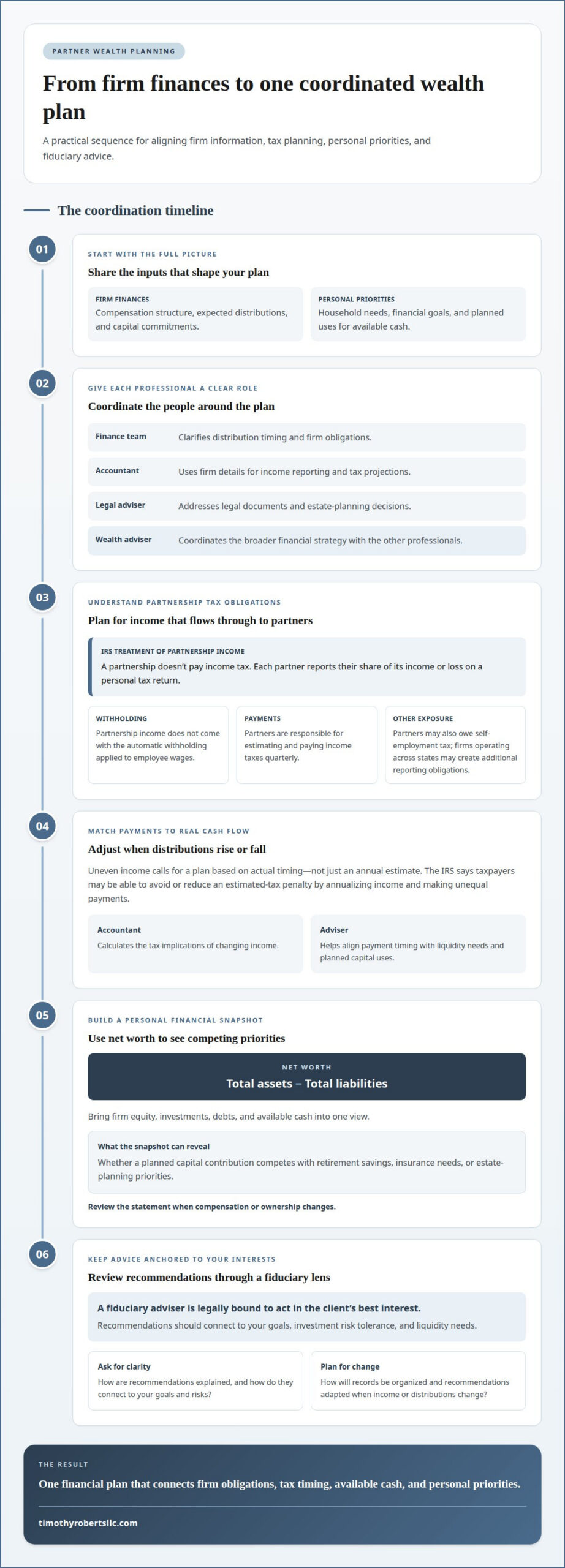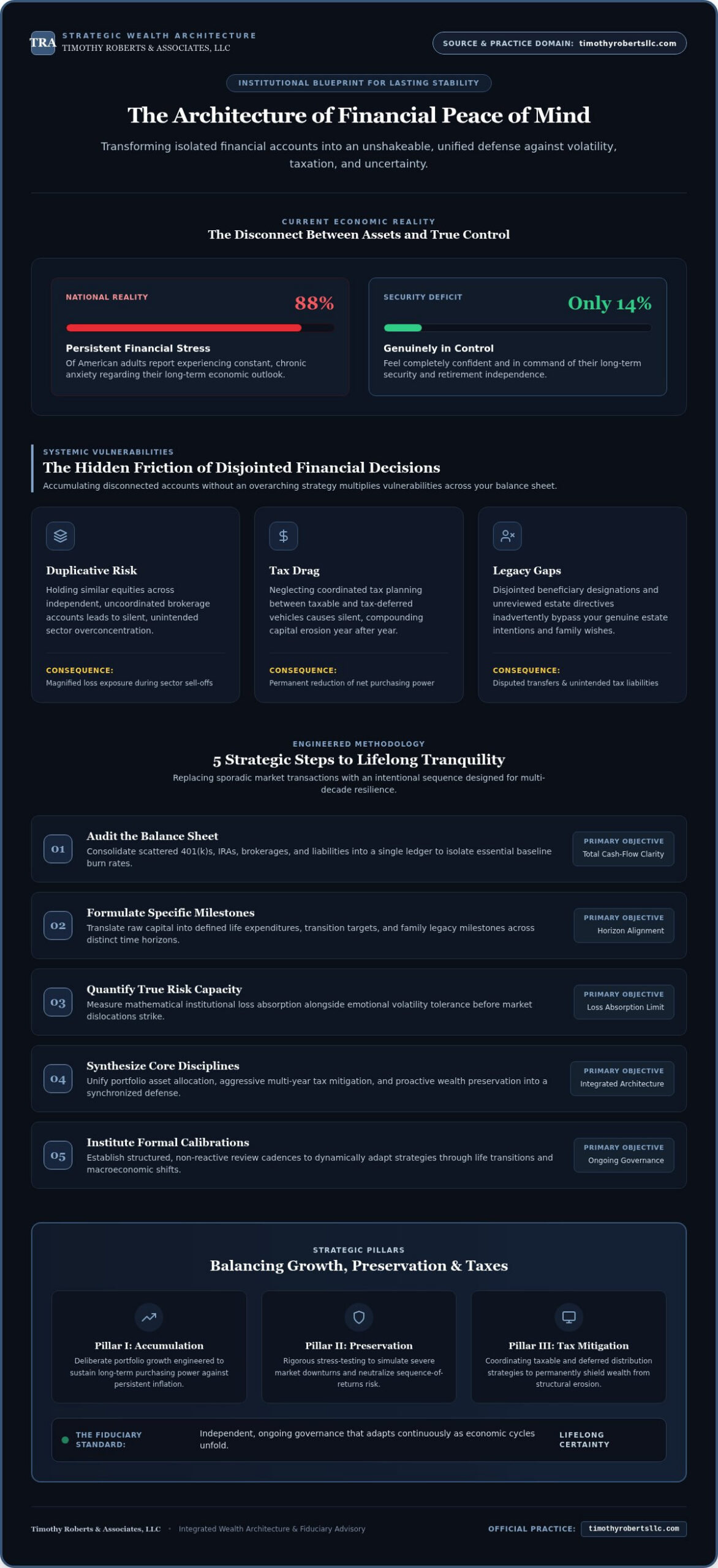
A portfolio alone cannot hold a family’s wealth strategy together. The right financial advisor to manage complex family wealth dynamics brings investment decisions, tax considerations, estate goals, risk management, and family priorities into a coordinated plan. That work can include aligning financial decisions with a family’s accountants, attorneys, trustees, and other specialists.
When wealth involves a family business, concentrated assets, multiple generations, or competing goals, it is reasonable to expect an advisor to do more than oversee investments. The challenge is to serve the broader plan without overlooking each family member’s needs, time horizon, or perspective.
This article explains how an advisor can coordinate complex financial decisions, support clearer family communication, and help prepare for wealth transfers and business succession. It also covers when relatives may benefit from working with the same advisor, what fiduciary service means in practice, and how to assess whether an advisor’s approach fits your family.
Key Takeaways
- Coordinate investment, tax, estate, and risk decisions so each part of the family’s wealth plan supports the others.
- Decide whether one advisor or separate advisors best balance family coordination with each member’s privacy, goals, and risk tolerance.
- Assess an advisor’s fiduciary approach, relevant experience, collaboration style, and long-term continuity before relying on their guidance.
- Use clear family communication and deliberate succession planning to address unequal inheritances, business transitions, and differing priorities.
Tax-efficient strategies, estate planning, trusts, and insurance
Complex wealth planning connects investment choices with tax considerations, estate goals, insurance, and family priorities. A financial advisor can coordinate these elements with a family’s accountants, attorneys, and trustees.
Integrating Investment, Tax, and Estate Planning
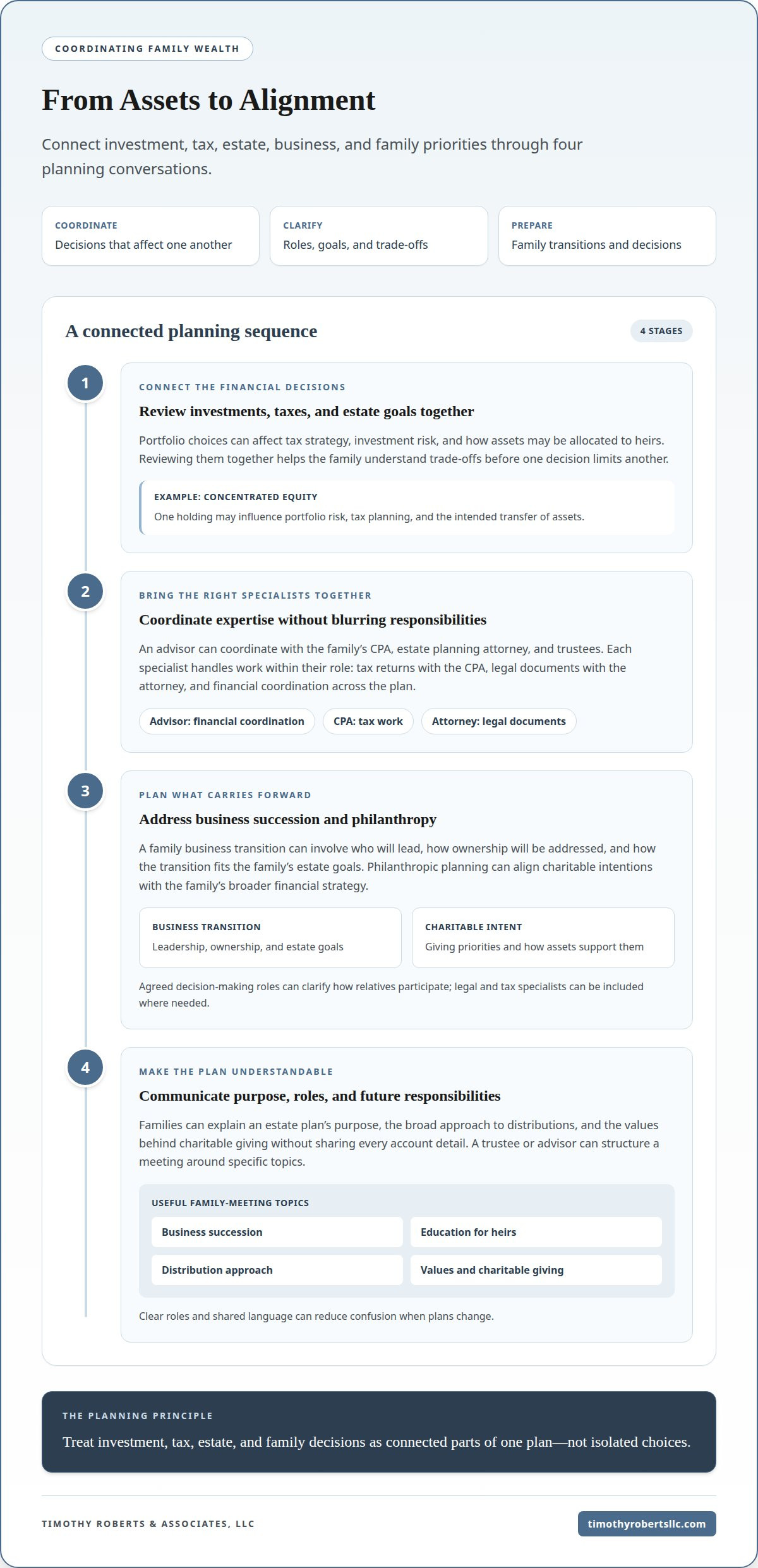
Integrated planning aligns portfolio decisions with tax strategy and the intended transfer of assets through an estate. For example, a concentrated equity position can affect investment risk, tax planning, and how assets may be allocated to heirs. Reviewing these decisions together helps families understand trade-offs before one choice limits another. An advisor can coordinate with a CPA and estate planning attorney, while those specialists handle tax returns and legal documents within their respective roles.
Planning for Succession and Philanthropy
Succession and philanthropic planning shape how a family’s assets, business responsibilities, and charitable intentions carry forward. A family business, for example, may need a transition plan that considers who will lead, how ownership will be addressed, and how the transition fits the family’s estate goals. A financial advisor can align the financial strategy with family priorities and coordinate discussions with legal and tax specialists. Agreed decision-making roles can clarify how relatives participate.
Communicating Net Worth and Estate Plans
Communication about net worth and estate plans means sharing the information relatives need to understand future responsibilities and decisions. Families can discuss an estate plan’s purpose, the broad approach to distributions, and the values behind charitable giving without disclosing every account detail. A trustee or advisor can structure a family meeting around specific topics, such as succession or education for heirs. Clear roles and shared language can reduce confusion when plans change.
Should Family Members Use the Same Wealth Advisor?
One advisor can streamline family communication, but a shared relationship must respect each person’s goals, privacy, and decision-making authority. The right arrangement depends on how closely relatives’ financial interests align and whether they can discuss priorities openly.
Balancing Needs, Values, and Goals
A shared advisor can coordinate family decisions while tailoring recommendations to each generation’s needs, values, and time horizon. A parent nearing retirement may prioritize income, while an adult child focuses on long-term growth. A useful framework clarifies both shared priorities and individual boundaries. Separate advisors may suit relatives whose goals, risk tolerance, or confidentiality needs differ substantially. Choosing a financial advisor to manage complex family wealth dynamics means weighing coordination alongside personal fit.
Planning Intergenerational Wealth Transfers
Intergenerational transfer planning prepares relatives for the financial responsibilities and choices that come with inherited wealth. Families can discuss the transfer’s purpose, the values they want it to support, and how younger generations might participate in decisions. An advisor can organize these conversations around shared goals and coordinate financial planning with other specialists. This structure can build understanding without assuming every heir will make the same choices.
Addressing Unequal Inheritances and Family Businesses
Unequal inheritances and business ownership call for direct conversations about fairness, responsibility, and differing goals. For example, one sibling may work in a family business while another has built a separate career. Equal ownership may not reflect their roles or the family’s intentions. A family meeting can clarify the reasoning behind proposed distributions and identify questions that need further planning. The advisor can support financial coordination, while legal questions should be addressed by legal professionals.
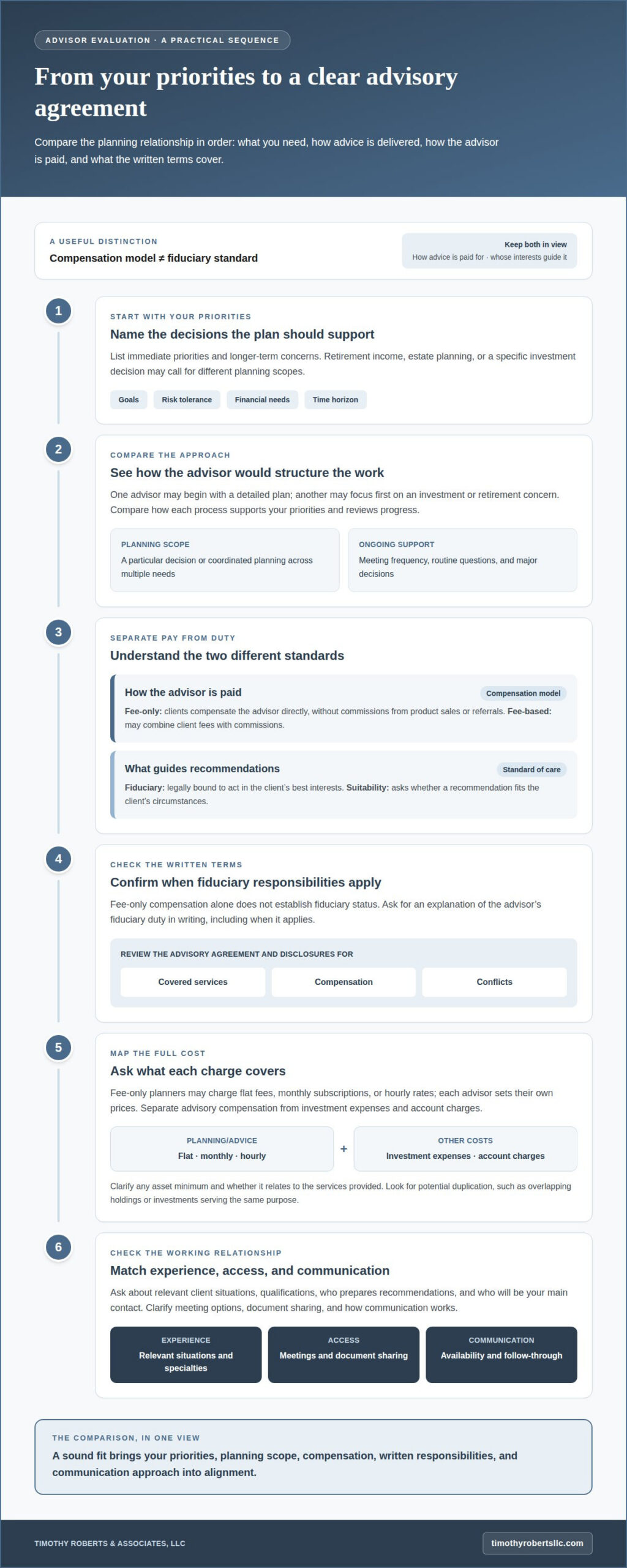
Compensation also matters. Advisors may charge hourly fees, retainers, subscriptions, or assets-under-management fees. A fee-only advisor receives compensation directly from clients rather than through product commissions. For families comparing a financial advisor to manage complex family wealth dynamics, clarify how compensation, decision-making authority, and potential conflicts are handled. International investments or cross-border family ties can add tax exposure, making coordination with tax specialists important. Discussing family financial planning can help determine whether one coordinated relationship fits your family.
Advisor experience and fiduciary service
Experience matters when family assets, goals, and decision-makers create overlapping financial questions. Ask how the advisor has handled comparable complexity, coordinated specialists, and planned for continuity if the lead advisor leaves.
Assessing Advisor Experience
Relevant experience means guiding families through interconnected financial decisions, not simply managing a portfolio. Ask the advisor to rate your situation against the complexity of existing clients on a scale from 1 to 10. Then ask which parts drive that assessment, such as business interests, concentrated assets, or multiple decision-makers. Specific examples can show whether their approach fits your circumstances.
Explore how the advisor works with accountants, estate planning attorneys, trustees, and investment specialists. Collaboration matters when a family’s plan spans tax, estate, and investment decisions. Discuss experience with complex or illiquid assets, which may require different analysis from publicly traded investments. Ask who would support your family over time and how continuity is addressed if the advisor’s role changes.
Review the advisor’s regulatory records, professional designations, and firm disclosures as part of your evaluation. Ask how education and professional development inform their work as family needs evolve. Clear answers should explain the advisor’s role, the specialists involved, and how decisions are communicated. Resistance to collaboration, implied guarantees, or limited experience with complex assets are warning signs.
Understanding Fiduciary Service
A fiduciary advisor is legally and ethically bound to put the client’s best interests first. This standard matters when family members have competing priorities or recommendations involve several financial choices. Ask how the advisor identifies and addresses conflicts, whose interests the engagement serves, and how recommendations are explained. The answers should clarify decision-making authority and the scope of the relationship.
Also ask how the advisor is compensated and whether recommendations could create conflicts. A fee-only advisor is compensated directly by clients rather than through commissions tied to products. Clarify how the advisor handles situations where one family member’s preferences differ from the shared plan. Defined roles, transparent communication, and a documented process help families assess whether advice supports their interests.
How should families handle unequal inheritances, family businesses, and differing financial goals?
Unequal inheritances are easier to discuss when families distinguish equal treatment from fair treatment. One heir may receive business ownership, while another receives different assets or support suited to their circumstances. A financial plan can make the reasoning visible: identify family priorities, consider each person’s responsibilities, and explain how the distribution relates to those priorities. Clear explanations help relatives understand the intent without assuming every outcome must be identical.
A family business adds operating decisions to inheritance and wealth planning. A family business enterprise worth $10+ million needs a defined mission, a strategic plan, and regular meetings with key stakeholders. Those discussions can clarify who participates, which roles carry responsibility, and how the next generation might prepare for leadership. Deciding who has a seat at the family office table can also shape how younger relatives understand their relationship to family wealth.
Different financial goals call for room for individual priorities alongside shared objectives. One family member may want to preserve business capital, while another prioritizes liquidity or a separate career. Advisors can use behavioral finance to understand how emotions and assumptions influence decisions. Structured family meetings give relatives space to explain concerns, distinguish facts from expectations, and identify decisions needing further analysis. This process helps keep personal preferences from becoming unspoken sources of tension.
For business succession, families can map the transition’s financial implications, define decision-making roles, and coordinate planning with relevant specialists. Regular meetings can track progress and revisit assumptions as leadership changes. A written family mission can anchor discussions when relatives disagree about growth, sale, or continued ownership. Develop a family financial plan that connects inheritance decisions, business continuity, and each generation’s goals.
Timothy Roberts & Associates: Financial Planning
Timothy Roberts & Associates can help families coordinate investment decisions, retirement needs, estate goals, and risk considerations within a financial plan. Consider working with the firm when family wealth involves changing priorities, a business transition, or questions about how assets may support future generations.
Investment Portfolio Management addresses investment decisions, while Retirement Income Planning focuses on retirement income needs. Estate & Legacy Planning helps families connect financial goals with the legacy they hope to create. Risk Management & Insurance Analysis adds another perspective to the broader plan.
Every family has different priorities. Contact Timothy Roberts & Associates to discuss your family’s financial planning needs.
Shape the Next Chapter of Your Family’s Wealth
A durable family wealth plan is not static. It should evolve as responsibilities shift, businesses change, and the next generation develops its own priorities. A financial advisor to manage complex family wealth dynamics can help translate those changes into thoughtful decisions while keeping the family’s longer-term direction in view.
Timothy Roberts & Associates, LLC offers Retirement Income Planning, Investment Portfolio Management, and Estate & Legacy Planning to support families as their needs develop. These planning areas can connect present decisions with future intentions and give family members a clearer basis for ongoing conversations.
Start a conversation about the priorities your family wants its wealth plan to serve. Contact Timothy Roberts & Associates, LLC to discuss a considered path forward and help your family move ahead with purpose.
Frequently Asked Questions
How does it work?
The process begins by mapping the family’s financial picture, decision-makers, and priorities. An advisor can organize assets, liabilities, income needs, and upcoming commitments into a shared view. For example, a planned business sale may affect retirement timing, cash needs, and investment decisions. The advisor can then develop recommendations, explain trade-offs, and revisit the plan as family circumstances or priorities change.
What Services Should an Advisor Offer to Support Multigenerational Families?
Look for services that address distinct needs across generations, including financial planning, investment management, retirement income, education funding, insurance analysis, and estate and legacy planning. A family supporting a student while preparing for a parent’s retirement may need education funding strategies and retirement income planning considered together. Tax planning can inform the broader financial picture, while tax professionals handle individual tax matters.
What Type of Financial Professional Should I Choose?
Choose based on the decisions you need help making. A Certified Financial Planner develops personalized plans and can advise on retirement, tax strategies, and investments. A portfolio manager focuses primarily on selecting and monitoring investments in light of goals and risk tolerance. For family-wide planning, consider whether the professional can address connected financial needs, explain their role clearly, and coordinate with your existing specialists.
What are the benefits?
A coordinated advisor relationship can help a family make decisions with a clearer view of their combined effects. For example, a parent’s support for an adult child may affect retirement cash flow, while an education commitment can influence saving priorities. A shared planning process can also give family members a structured way to discuss responsibilities, clarify assumptions, and understand how individual choices relate to family objectives.
What does a financial advisor specializing in complex family wealth dynamics do?
A financial advisor specializing in complex family wealth dynamics helps connect a family’s financial decisions to its goals, circumstances, and time horizons. This may include reviewing investment portfolios, retirement needs, risk exposure, and plans for future generations. The advisor can help identify how decisions affect one another, explain options in practical terms, and coordinate financial discussions with the family’s other professional advisers.
How to find a financial advisor for multigenerational or blended-family wealth?
Look for an advisor who can explain how their approach accommodates different priorities, privacy needs, and family relationships. In an introductory discussion, describe a practical situation, such as supporting children from different households while planning for retirement. Ask how the advisor would organize the financial questions, communicate with relevant family members, and define who makes decisions. Clear answers can show whether the working relationship fits your family.