

Nov
Financial planning for tech professionals with California stock options
A stock-option exercise can create ordinary income before you sell the shares. For California tech professionals, financial planning for tech professionals with RSUs and stock options means understanding when equity becomes taxable, how California treats gains, and whether withholding will cover the eventual bill.
It’s easy to focus on an award’s value and overlook when its tax consequences arise. RSUs are generally taxed as ordinary income when they vest, based on fair market value. Non-qualified stock options can also create ordinary income when exercised, while incentive stock options may raise separate alternative minimum tax considerations.
This guide explains how California taxes RSUs and stock options, why the difference between vesting, exercising, and selling matters, and how tax and investment planning can help coordinate equity with your broader financial goals. You’ll also see how to think through concentration risk, cash needs, and decisions about holding or selling company shares.
Key Takeaways
- For private-company equity, align exercise timing with cash needs and potential liquidity events, since tax bills can arrive before shares can be sold.
- Distinguish RSUs, ISOs, NSOs, and ESPPs; each has different tax considerations and decision points.
- When evaluating NSOs, account for ordinary income at exercise as well as the tax consequences of holding or selling the shares.
- Integrate equity decisions with portfolio concentration, retirement objectives, and your broader financial plan.
Can you help with RSUs and stock options?
Yes. Equity decisions can be coordinated with liquidity needs, tax exposure, and portfolio diversification. For private-company awards, a multi-year exercise plan can connect option decisions with the possibility of a future IPO or acquisition.
Multi-Year Private-Company Exercise Planning
A multi-year plan maps possible exercises against income, available cash, and the company’s path to liquidity. Double-trigger RSUs at private companies generally provide no liquidity until a corporate event, such as an IPO or acquisition. Consilio notes that tax bills on private-company equity can arrive before liquidity does. Vested options may also expire after an employee leaves, often within 90 days, so departure timing matters.
Managing Employer-Stock Concentration
Employer shares can connect your paycheck, future compensation, and investment portfolio to one company. A portfolio with 10 to 15 percent in company stock can represent meaningful concentration risk. Consider how much of your financial plan already depends on the employer, including unvested awards and future income. A sharp decline can affect both, so set a target allocation and review it as awards vest.
Diversifying Concentrated Company Stock
Diversification turns concentrated stock into a deliberate sequence of decisions, rather than a single all-or-nothing sale. For each vest or exercise, weigh cash needs, tax effects, company prospects, and the share of your portfolio tied to the employer. A 10b5-1 plan can schedule automatic sales at set intervals. That approach can support a consistent strategy, while the appropriate schedule depends on your financial plan and liquidity needs.
Tax Brackets, Capital Gains Rates, and AMT Exemptions
The applicable 2026 federal bracket, capital-gains rate, and AMT exemption amount depend on factors such as filing status, taxable income, and ISO activity; no single figure applies to every employee. According to the IRS, company shares held for over a year may qualify for long-term capital-gains rates. ISO exercises can also create AMT considerations, so model the exercise alongside other income and available cash before deciding on timing.
What makes financial planning unique for tech professionals?
RSUs are generally taxed as ordinary income when they vest, based on their fair market value. When you later sell the shares, the holding period and price movement help determine the tax treatment of any gain.
RSU Vesting and Taxation
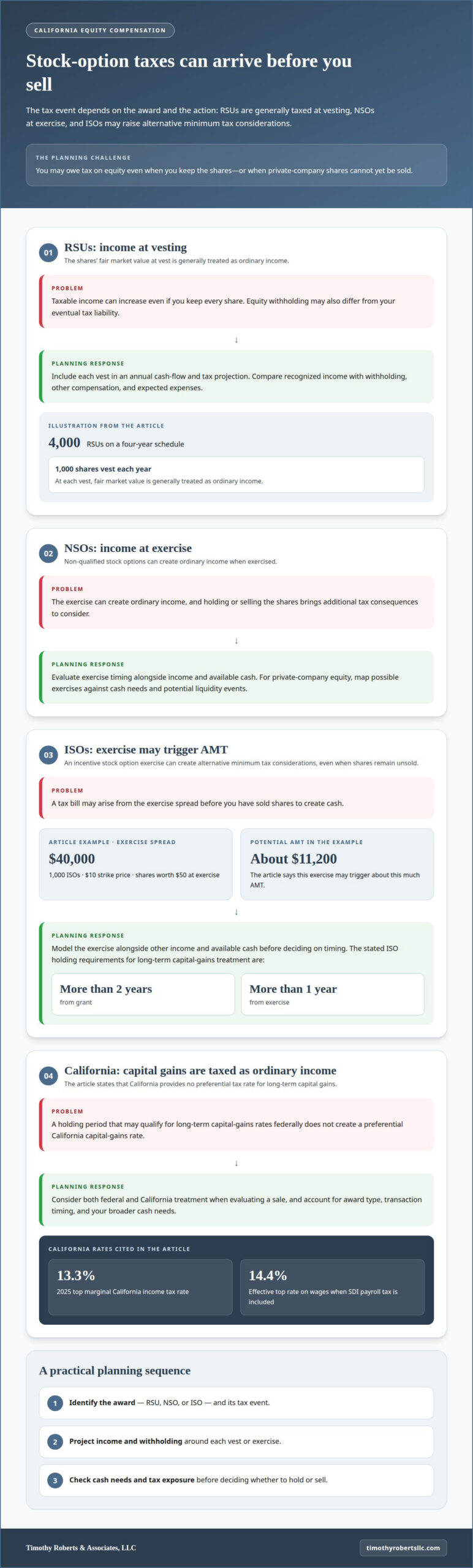
A compensation plan may spread RSU vesting across several years. For example, a 4,000-RSU grant on a four-year schedule could vest 1,000 shares each year. At each vest, the shares’ fair market value is generally treated as ordinary income. That can raise taxable income even if you keep every share instead of selling them.
Include each vest in an annual cash-flow and tax projection. Compare income recognized at vesting with payroll withholding, other compensation, and expected expenses. Equity withholding may not match your actual tax liability, so a projection can flag a potential shortfall before filing season. For complex compensation, model each vest date instead of treating the grant as a single event.
Holding and Selling Vested Shares
Once shares vest, consider whether holding them still fits your goals. Weigh the company’s prospects, your portfolio exposure, near-term cash needs, and the role equity already plays in your wealth. Holding keeps your outcome tied to the company’s stock; selling can free funds for other priorities but may have tax consequences.
Use a repeatable strategy for each vest: estimate the tax impact, identify cash needs, then choose whether to sell or retain shares. The Internal Revenue Service says gains from company shares held for over a year may qualify for long-term capital-gains rates. That timing consideration belongs beside your financial goals, not apart from them. Financial planning can help coordinate equity decisions with broader priorities.
A deliberate approach to financial planning for tech professionals with RSUs and stock options connects each vest with cash flow, tax projections, and portfolio decisions. Track vest dates, values, withholding, and sales in one schedule to see how compensation affects your finances. Good planning accounts for both current choices and future goals, with strategies adjusted as circumstances change.
How is equity compensation taxed in California?
California tax treatment depends on award type and transaction timing. RSUs, options, and employee stock purchase plans each create distinct tax events to coordinate with longer-term goals.
Equity Compensation Types
RSUs generally create ordinary income when they vest; NSOs can create ordinary income when exercised. ISOs have separate tax considerations, including potential alternative minimum tax, while ESPPs let employees buy company shares through payroll deductions. Performance shares and deferred compensation also require attention to award terms and timing. An advisor should map each award’s vesting, exercise, and sale events before connecting equity compensation to diversification or planned spending.
ISO Taxation and the AMT
Exercising ISOs can create alternative minimum tax considerations, even when shares remain unsold. For example, exercising 1,000 ISOs with a $10 strike price when shares are worth $50 creates a $40,000 spread and may trigger about $11,200 in AMT. To meet the stated holding requirements for long-term capital-gains treatment, shares must be held more than two years from grant and more than one year from exercise.
California taxes long-term capital gains at ordinary income tax rates, with no preferential rate. The state’s top marginal income tax rate is 13.3% for 2025; wage earners also pay SDI payroll tax, bringing the effective top rate on wages to 14.4%.
Early-Exercise Elections and Deadlines
An 83(b) election may be relevant when early-exercised options result in shares subject to vesting. The filing window is tied to the share-transfer date, so that date anchors the election timeline. Consider the election alongside the shares’ value, potential future growth, and the risk of paying tax before those shares become liquid.
For major goals such as a home purchase or education funding, model the net proceeds after taxes rather than the award’s headline value. An advisor can coordinate sale timing, diversification, and long-term goals while accounting for performance shares and deferred compensation in the broader plan.
Non-qualified stock options and ordinary income
Non-qualified stock options can create ordinary income when employees exercise, before they sell shares. The taxable spread is the difference between the exercise price and the shares’ fair market value at exercise. That income is added to compensation for the year, making exercise timing a career and cash-flow decision, not simply an investment choice.
Start by modeling each proposed exercise. Estimate the spread, add it to expected salary and other income, then assess whether available cash can cover the resulting tax obligation. Equity withholding may not match actual tax liability, so the withholding amount alone does not establish the final bill. A written projection can show how an exercise affects income and cash reserves.
Consider a practical scenario: an employee exercises vested NSOs while still working for the company. The spread creates ordinary income, while later changes in share value affect the separate outcome when shares are sold. Keeping these events distinct helps evaluate whether to exercise and sell, exercise and hold, or stage decisions across tax years.
Connect the option schedule with career plans and other financial priorities. A departure can leave vested options subject to a limited exercise window, often 90 days, or they may expire. That deadline can compress a decision involving tax, cash, and company-stock exposure. Reviewing vesting, exercise terms, liquidity, and retirement needs together can clarify the trade-offs.
The central takeaway is to treat NSOs as compensation with an investment decision attached. Model the exercise spread before acting, account for possible tax withholding gaps, and consider how retained shares affect diversified wealth. For a coordinated view of equity decisions, retirement priorities, and wealth management, plan your next financial steps.
Timothy Roberts & Associates: Financial Planning
Timothy Roberts & Associates can connect equity decisions with your broader financial priorities through Financial Planning. Consider this support when RSU vesting or an option exercise affects cash flow, portfolio balance, retirement goals, or estate plans.
A coordinated plan can consider company shares alongside other investments, retirement income needs, and legacy priorities. Investment Portfolio Management can address how concentrated holdings fit within your portfolio, while Retirement Income Planning can connect today’s equity choices with future income needs. Estate & Legacy Planning can incorporate accumulated wealth into broader legacy goals.
If your equity compensation is prompting decisions about exercising, holding, or selling shares, contact Timothy Roberts & Associates to discuss your financial planning needs.
Shape Your Next Equity Decision With Intention
A compensation decision can affect more than this year’s finances. It can shape career flexibility, future income, and the choices available as your priorities change. Financial planning for tech professionals with RSUs and stock options is most useful when it connects equity decisions to the life you’re building, rather than treating each vest or exercise as an isolated event.
Use a planning conversation to clarify what you want your wealth to support, which trade-offs deserve attention, and how your next decision fits the larger picture. Timothy Roberts & Associates, LLC can help bring those priorities into focus and develop a financial plan aligned with your goals. The next step is a thoughtful discussion, even if you don’t have every answer yet.
Start a conversation about your financial plan, and take the next step with greater clarity.
Frequently Asked Questions
Can I retire early as a tech professional?
Early retirement planning starts by testing whether reliable resources can support projected spending after work income stops. Separate liquid, diversified investments from unvested awards, which depend on continued employment and company performance. Then model how salary changes, equity sales, and retirement-account withdrawals affect the timing of your transition. Account for housing, healthcare, and other recurring commitments, too.
How are nonqualified stock options (NSOs) taxed at exercise and sale?
At exercise, the spread between an NSO’s exercise price and its fair market value generally creates ordinary income. Selling shares later creates a separate tax calculation based on the change in value after exercise. Keep the exercise confirmation and sale records together, then compare the sale price with the value recorded at exercise. The holding period can also affect whether gains qualify for long-term treatment.
When should I sell vested RSU shares versus hold them?
Selling can make sense when reducing company exposure or funding a planned goal matters more than retaining additional upside; holding may fit when the position supports your broader investment strategy. Compare the after-tax proceeds from selling with the role those funds would serve elsewhere. Before keeping more shares, consider upcoming expenses and other employer-linked wealth, including salary and future awards.
How do vesting schedules, blackout windows, and 10b5-1 plans affect stock-sale decisions?
Vesting dates determine when shares become available, while blackout windows can limit when employees may trade. A 10b5-1 plan lets employees and executives schedule automatic company-stock sales at set intervals. Planning around these features can replace last-minute decisions with a defined approach. Review the schedule alongside expected cash needs and your target company-stock exposure before setting a sale pattern.
What should I consider before exercising private-company stock options, including expiration and liquidity risk?
Before exercising, weigh the exercise cost, potential tax from the spread, and whether you can manage those obligations without selling shares. Private-company equity may remain illiquid until an IPO or acquisition, so a tax bill can precede access to cash. Also review the option expiration terms: vested options often have a limited post-employment exercise window, commonly 90 days, before expiration.
How can RSUs and stock options affect estimated taxes, withholding, and state taxes?
Equity compensation can increase taxable income at vesting or exercise, while withholding may fall short of actual tax liability. Compare expected wages and equity events with payroll withholding, then plan for any gap using projected cash flow. In California, long-term capital gains are taxed at ordinary income rates. Coordinate vesting, exercise, and sale timing with your state-tax picture and annual income estimate.
