

Nov
How to budget for retirement travel and hobby costs
People over age 65 in the United States averaged $5,007 in monthly expenditures in 2023. That figure covers overall spending, not a recommended travel or hobby budget, but it offers a useful starting point for how to budget for travel and hobbies in retirement: make room for the experiences you want while accounting for the rest of your financial plan.
Travel and hobbies can look very different from one retirement to another. The right budget depends on the trips and activities you want, when you plan to enjoy them, and the income available to support them. A fiduciary financial advisor can help estimate costs, weigh options against your priorities, and incorporate planned spending into a retirement income strategy. This guide explains the main costs to consider, how to shape plans around your budget, and ways to include travel and hobbies in your retirement plan.
Key Takeaways
- Build a travel budget around transportation, lodging, meals, activities, and emergency needs so each trip’s full cost is considered.
- Destination, timing, and travel style can shape costs; an advisor can help weigh affordable options against the experiences that matter most.
- Estimate annual travel and hobby spending as part of your broader retirement income plan, accounting for when expenses are expected.
- A financial advisor can align planned spending with income, investments, and other priorities to create a more considered retirement strategy.
How a financial advisor accounts for transportation, lodging, meals, activities, and emergencies in a retirement travel budget
To estimate travel costs, map out transportation, lodging, meals, and planned activities. Airfare, rental vehicles, fuel, parking, and local transit all affect the total. A road trip, for example, replaces airfare with driving costs and may require overnight stops. Put these items into a trip budget, then compare the total with the retirement income available.
Costs need room to change. A longer stay may alter meal and lodging expenses, while an activity such as guided hiking may add equipment or admission costs. The advisor can distinguish expected spending from emergency reserves, then show how changes in trip length or style affect the overall plan. For context, average annual expenditures for people over age 65 in the United States were $60,087 in 2023; that figure includes more than travel and isn’t a personal travel allowance.
Medical planning also matters. Medicare may not cover international care, so travelers should understand how their policy applies at their destination. Travel insurance can cover medical emergencies, trip cancellations, lost luggage, and emergency evacuation. An advisor can incorporate the potential premium into the trip estimate and help identify the coverage questions that affect the travel reserve. Domestic and international coverage depend on the policy and destination.
Flexible planning connects travel and leisure activities to savings, income, and essential expenses. A financial advisor weighs desired hobbies, such as photography or community classes, against housing, healthcare, and other ongoing commitments. Choosing activities that reflect personal values helps distinguish meaningful spending from costs that can be adjusted. For one-time expenses expected within 24 months, the advisor may plan for cash alternatives; expenses three or more years away are likely invested in a mix of fixed income and stocks. This timing can help accommodate an active lifestyle without treating every year’s travel or hobby spending as fixed.
2. Choosing affordable destinations and scaling back trip costs
Destination and travel style shape a vacation budget. An advisor can compare options such as a shorter stay, a nearby destination, or a cruise against the retirement income available. This keeps the decision focused on priorities: preserve the experience that matters, and adjust flexible details such as trip length or paid excursions, whether that means a simple scenic tour or a private yacht outing with Happiest Ours.
Hobbies can bring costs beyond travel. Consider ongoing expenses such as equipment, supplies, storage, and lessons. Someone interested in photography, for example, could compare buying a camera with taking a class, renting equipment, or budgeting for bespoke picture framing via gallery.first4frames.co.uk. Estimate the full commitment before treating a hobby as a one-time purchase.
A vacation home requires a different scale of planning. In the United States, a vacation home was worth approximately $465,000 in 2022. That figure illustrates why ownership should be considered alongside travel spending, rather than treated like an ordinary trip. An advisor can help model how the purchase would affect retirement income and other goals, then compare ownership with alternatives such as renting a place for a planned stay.
Travel spending may change later in retirement. One planning approach accounts for costs declining or disappearing when retirees reach their 80s, with travel spending potentially tapering 10 to 15 years before a plan ends. This is not a reason to postpone experiences automatically. Instead, an advisor can model more travel in earlier years and less later, while considering health, interests, and other expected expenses. That progression gives the budget room for active years without assuming the same vacation pace will continue indefinitely.
4. Estimating annual retirement travel spending with a financial advisor
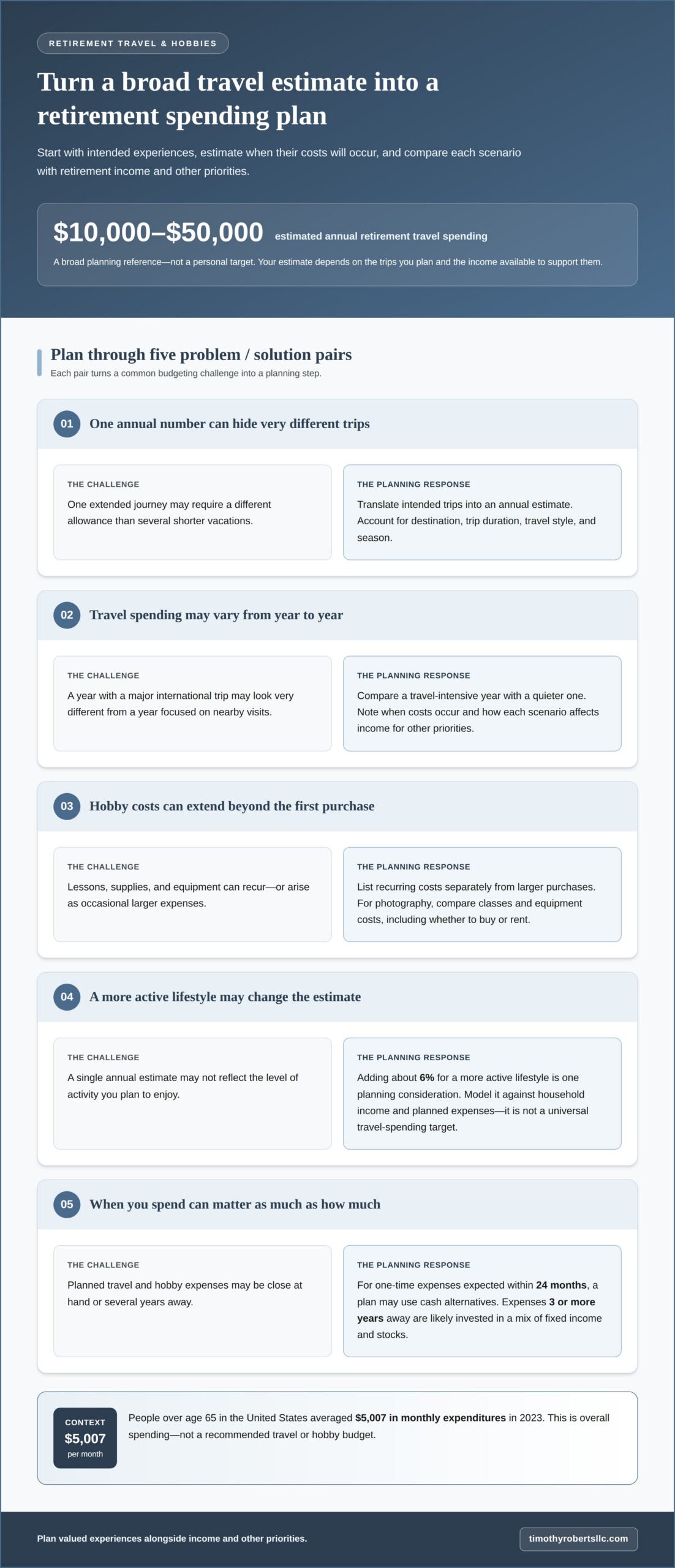
One estimate places annual retirement travel spending between $10,000 and $50,000. That broad range is a planning reference, not a personal target. To understand how to budget for travel and hobbies in retirement, an advisor can translate intended trips into an annual estimate. The projection can reflect destinations, trip duration, travel style, and season. A couple planning one extended journey may need a different allowance than someone taking several shorter vacations.
Compare planned travel with retirement income and other expected spending. A year with a major international trip may need a different allocation from a year focused on nearby visits. Reviewing both scenarios shows how travel choices affect income available for other priorities. It also helps avoid assuming the same travel budget is needed every year.
Include hobbies in the annual budget as well. Separate recurring costs, such as lessons or supplies, from occasional larger purchases. Photography might involve classes and equipment, while gardening may call for seasonal supplies. Record each activity and when its costs arise to see what repeats and what belongs to a particular year.
Retirement spending can evolve as interests and activity levels change. Adding about 6% for a more active lifestyle may help ensure sufficient retirement savings for travel. An advisor can model that assumption against household income and planned expenses, then assess how the allocation affects other goals. This figure is a planning consideration, not a universal travel-spending target.
A useful way to budget for travel and hobbies in retirement is to compare different scenarios. Project a travel-intensive year alongside a quieter one, noting when expenses occur and how they interact with other plans. Revisit the projections as your priorities change. This gives the annual estimate a clear purpose: supporting valued experiences while keeping the wider retirement plan in view.
5. Working with a financial advisor to budget for retirement travel
A financial advisor starts with the experiences you want, then tests them against income, savings, and essential expenses. There is no single percentage of retirement income that fits every household. Adding about 6% for a more active lifestyle may help ensure sufficient retirement savings for travel, but that figure concerns savings, not a universal spending target. A personalized plan weighs travel and hobby priorities against housing, healthcare, and other commitments.
Rising travel costs can change what an annual budget supports. An advisor can project future trip costs using the destinations, travel style, and timing you expect, then revisit those assumptions as plans and prices change. For example, the plan might compare a longer stay in one place with several shorter trips. This makes the effect of changing travel plans visible without relying on one fixed cost estimate.
Start with a clear picture of your priorities and finances. Note intended destinations, trip length, preferred season, transportation, lodging, meals, and activities. Include hobbies too, from recurring class fees to occasional equipment purchases. Income sources, savings, and essential expenses help put these plans in context.
Keep a record of actual spending as the plan develops. Group trip expenses by category, and distinguish one-time purchases from recurring hobby costs. After a vacation, an advisor can compare the actual total with the estimate, identify which assumptions changed, and revise future projections. If a travel credit card is part of the plan, paying its balance in full monthly helps avoid interest fees.
This process turns a travel wish list into a considered part of retirement income planning. Explore retirement income planning to connect your travel goals with the wider financial picture.
Timothy Roberts & Associates
Timothy Roberts & Associates, LLC can help connect travel and hobby goals with your broader financial picture. Through Financial Planning and Retirement Planning, the firm can consider how planned experiences fit alongside income needs and other priorities. Wealth & Investment Management, Insurance & Annuities, and Estate & Trust Planning can also inform your wider strategy. The firm’s fiduciary approach is guided by “Your Interest is Our Only Interest.”
Consider working with a fiduciary advisor if travel plans are changing, hobby expenses are growing, or you want a clearer view of how discretionary spending fits your retirement income plan. Start with the experiences you value, your expected spending patterns, and the financial priorities your plan needs to support. This creates a more integrated basis for decisions as retirement evolves.
Contact Timothy Roberts & Associates to discuss incorporating travel and hobbies into your retirement plan.
Shape a retirement plan that can evolve
A retirement plan is a framework, not a fixed script. New interests, family priorities, and changing expectations can reshape how you want to spend your time. Include travel and hobbies in that evolving picture so future decisions reflect what matters to you, not an outdated assumption.
Knowing how to budget for travel and hobbies in retirement means connecting personal goals with a plan that can adapt. A fiduciary advisor can help you revisit priorities as circumstances change, consider how decisions affect other goals, and refine your strategy over time. The point is not to predict every detail, but to have a thoughtful structure for making decisions.
If you’re ready to bring your retirement goals into a broader financial conversation, contact Timothy Roberts & Associates, LLC. A considered next step can help you move toward the experiences you value with greater clarity and confidence.
Frequently Asked Questions
What’s the Average Retiree Expenditure per Month?
People over age 65 in the United States averaged $5,007 in monthly expenditures in 2023. This figure represents overall spending, not travel alone or a recommended budget for every retiree. A household’s own monthly costs depend on its income, housing, healthcare, and lifestyle. Treat the average as context, then assess how personal expenses and leisure priorities fit together.
How much do retirees typically spend on travel per year in the United States?
One estimate for annual retirement travel spending is between $10,000 and $50,000. The range is broad because travel patterns vary, from occasional domestic vacations to extended trips. A useful estimate reflects the number and length of planned trips, destination choices, and travel style. Consider building separate projections for a travel-intensive year and a quieter one, rather than assuming annual spending stays constant.
How much should retirees budget annually for hobbies and recreation?
There is no single annual amount that suits every retiree. A budget for community classes, gardening, or photography will differ from one that includes costly equipment or frequent lessons. List recurring expenses separately from occasional purchases, then estimate how often each activity will take place. A hobby with seasonal supply costs, for instance, may create uneven spending throughout the year even if the annual total is manageable.
What are ways retirees can reduce travel costs, such as off-season trips, senior discounts, and travel rewards?
Consider traveling outside peak seasons, choosing flexible dates, or shortening a stay to reduce costs. Some travel or activity providers may offer senior discounts, and rewards can offset eligible expenses when used carefully. Compare the full itinerary, not just one fare or perk. If you use a travel credit card, pay the balance in full each month to avoid interest charges.
What percentage of retirement income should be allocated to travel and hobbies?
There is no single percentage of retirement income that fits every household. Adding about 6% for a more active lifestyle is a savings-planning consideration, not a universal travel or hobby spending target.
What budgeting tools or worksheets help retirees track travel and hobby spending?
Track actual spending by grouping trip costs into categories and separating one-time purchases from recurring hobby expenses. Compare actual costs with estimates, then revise future projections.
