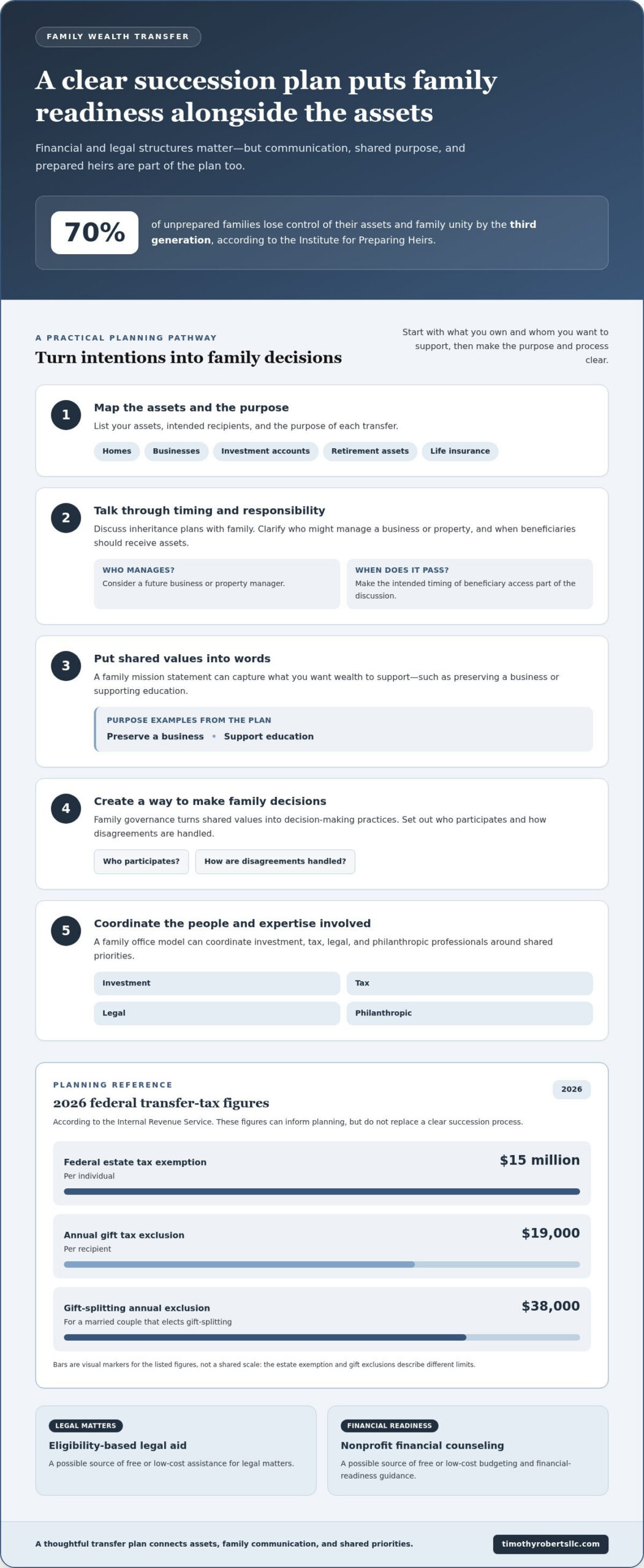
An estimated $124 trillion will change hands over the next two decades. This represents the most significant wealth shift in American history. You’ve built more than a portfolio; you’ve established a foundation for your family’s future. It’s natural to feel a sense of urgency about protecting that capital while wondering if the next generation is prepared for the weight of the inheritance. With the federal estate tax rate at 40% for estates exceeding the permanent $15 million exemption, the focus has shifted from reactive tax avoidance to proactive legacy design.
We believe that high-level wealth management is a partnership in organizational evolution. This article provides the strategic roadmap you need to master multi-generational wealth transfer strategies that balance technical precision with emotional intelligence. You’ll learn how to leverage the $19,000 annual gift exclusion and advanced trust structures to ensure your transition is seamless, tax-efficient, and deeply intentional. We’ll guide you through the process of preparing your heirs for their roles as stewards of a lasting family legacy.
Key Takeaways
- Transition from static estate planning to a dynamic legacy model that prioritizes long-term family evolution over simple asset distribution.
- Navigate the 2026 tax environment with precision by implementing multi-generational wealth transfer strategies that capitalize on the $15 million federal exemption.
- Evaluate advanced trust structures as intentional interventions designed to shield your family capital while maintaining essential flexibility for future generations.
- Define and implement “Wealth Readiness” protocols to prepare your heirs for the responsibilities of inheritance and preserve their individual ambition.
- Learn how a visionary fiduciary strategist synthesizes complex tax, investment, and legacy goals into one cohesive and actionable roadmap.
The Evolution of Legacy: Why Traditional Estate Planning Is No Longer Enough
Wealth is far more than a static balance sheet. It is a living, breathing entity that requires intentional cultivation to survive the passage of time. Many families view their legacy through the narrow lens of traditional estate planning, assuming that a single set of documents secures the future. However, effective multi-generational wealth transfer strategies require a fundamental shift from reactive snapshots to proactive, long-term stewardship. This is a journey of upward progression where financial capital and family values intersect to create a lasting impact.
Data suggests that 70% of intergenerational transfers fail by the second generation. This staggering decay rarely stems from poor investment returns or high tax rates alone. Instead, the primary causes often involve a breakdown in family communication and a lack of heir preparation. When wealth is treated as a transaction rather than a transformation, the result is often a loss of both capital and purpose. Success requires a visionary approach that synthesizes technical tax optimization with a focus on family governance.
Common reasons for transfer failure include:
- Lack of financial education for heirs.
- Absence of a shared family vision.
- Inadequate tax and legal coordination.
- Failure to update strategies as family dynamics change.
To better understand how these dynamics play out in real-world scenarios, watch this helpful guide on building lasting family wealth:
Beyond the Will: Wealth Transfer vs. Basic Estate Planning
A will is the floor of a financial plan; it’s never the ceiling. While it provides a basic structure for asset distribution, it often lacks the nuance required for complex family dynamics. Relying solely on probate can expose family privacy to public record and create unnecessary delays in asset access. Sophisticated families require integrated estate planning that functions as a carefully crafted intervention. This approach ensures that your strategy evolves alongside shifting tax laws, protecting your interests against the volatility of the legislative landscape.
The $68 Trillion Shift: Understanding the Great Wealth Transfer
We’re currently witnessing the movement of $68 trillion between generations. This massive shift presents a unique window of opportunity for those who act with intention. Accidental inheritance, where wealth arrives without a structured roadmap, frequently leads to rapid depletion and family discord. Proactive planning is essential before the 2026 tax shifts redefine the landscape. Utilizing robust multi-generational wealth transfer strategies allows you to secure your family’s upward progression while others are left reacting to change. By establishing a clear vision now, you ensure that your legacy reflects your personal values rather than becoming a source of stress.
Navigating the 2026 Tax Landscape: Maximizing Exemptions and Minimizing Liabilities
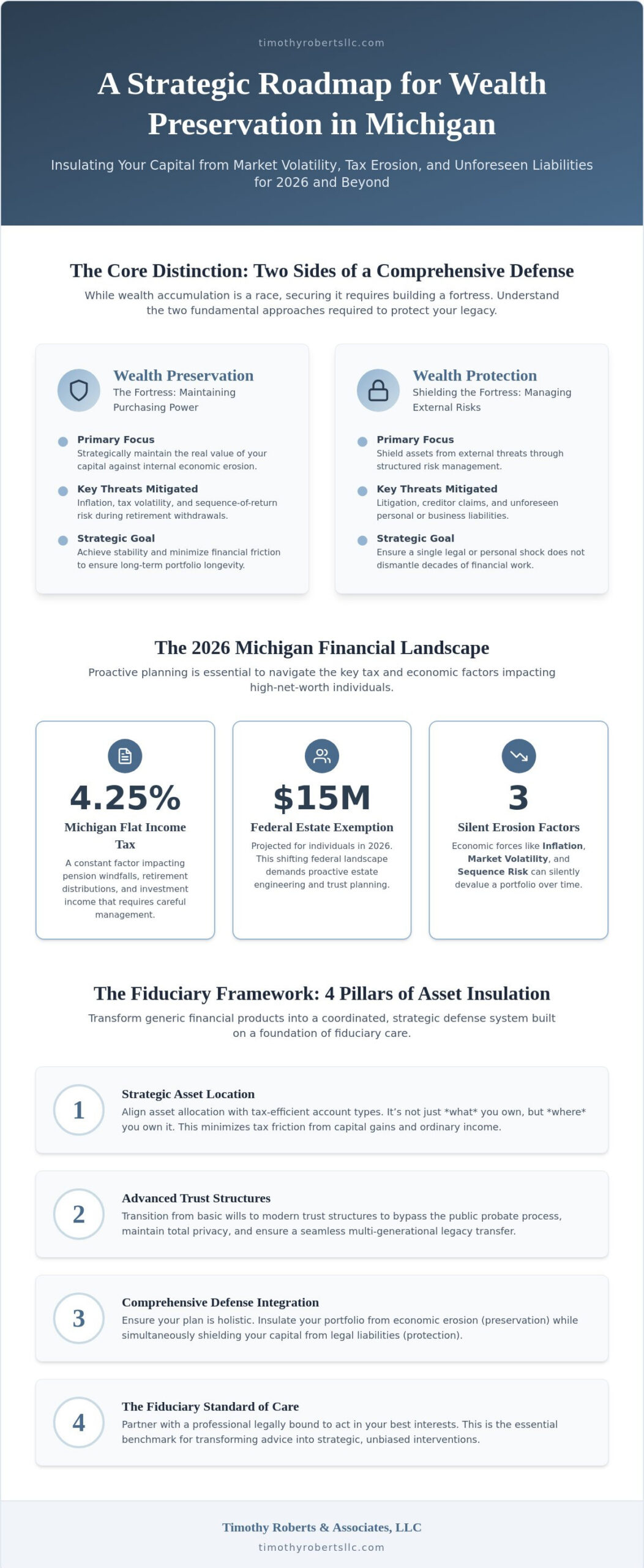
The legislative landscape has clarified significantly. While previous years were defined by the anxiety of the 2026 sunset provisions, the passage of the One, Big, Beautiful Bill in 2025 established the $15 million individual exemption as a permanent pillar of the 2026 tax landscape. This stability allows for a deeper, more intentional approach to stewardship. High-net-worth families can now move beyond defensive reactions toward a narrative of sustained partnership and growth. With a 40% tax rate applied to estates exceeding this threshold, the stakes for precision remain exceptionally high.
Effective multi-generational wealth transfer strategies must account for the Generation-Skipping Transfer Tax (GSTT) to be truly successful. This tax acts as a shield against the repetitive friction of transfer taxes that can erode family capital as it passes through multiple tiers of descendants. Alongside GSTT planning, the step-up in basis remains a cornerstone of capital gains mitigation. By holding appreciated assets until death, heirs receive property valued at its current market rate. This effectively erases years of accumulated tax liability and provides a clean slate for the next generation’s investment journey.
Annual Exclusion Gifting: A Compounding Strategy
Small, consistent actions often yield the most significant results. For 2026, the annual gift tax exclusion sits at $19,000 per recipient. When spouses utilize gift splitting, they can transfer $38,000 annually to an unlimited number of heirs without touching their lifetime exemption. This rhythm of giving removes future appreciation from your taxable estate. It allows wealth to compound in the hands of heirs early, fostering a sense of responsibility and financial maturity long before a final inheritance occurs. Implementing these tax planning strategies ensures that your wealth serves as a catalyst for family growth rather than a tax burden.
The Strategic Advantage of Upstream Gifting
While most strategies look forward, a visionary advisor might suggest looking back. Upstream gifting involves transferring assets to older family members, such as parents or grandparents, to utilize their unused estate tax exemptions. When these family members pass away, the assets return to the younger generation with a refreshed cost basis. It’s a sophisticated intervention that requires careful vetting. You must consider the potential impact on the older generation’s Medicaid eligibility and the risk of exposure to their creditors. This strategy outperforms traditional downstream gifts in specific high-growth scenarios where basis adjustment is the primary goal.
Advanced Wealth Transfer Vehicles: From Strategic Gifting to Protective Trusts
Designing a legacy requires more than intent; it requires precision-engineered vehicles that safeguard capital while fostering family development. We view trusts not merely as legal instruments, but as carefully crafted interventions that bridge the gap between current control and future stewardship. The challenge for many high-net-worth families lies in balancing the grantor’s desire for oversight with the beneficiary’s need for flexibility. Effective multi-generational wealth transfer strategies solve this by utilizing structures that adapt to the changing needs of the family while maintaining a rigorous defense against external risks.
The success of these vehicles depends on the seamless integration of legal architecture and financial execution. Your investment portfolio management must align strictly with the specific mandates of each trust. A trust designed for long-term growth requires a different risk profile than one focused on immediate liquidity for estate tax obligations. For families with significant business interests, the Family Limited Partnership (FLP) offers an additional layer of sophistication. By centralizing management and allowing for valuation discounts on transferred interests, the FLP facilitates the transition of leadership without compromising the integrity of the enterprise.
Irrevocable Trusts: The Gold Standard for Asset Protection
Irrevocable structures are the cornerstone of a robust legacy. The Irrevocable Life Insurance Trust (ILIT) remains a primary tool for providing the liquidity needed to cover the 40% federal estate tax without depleting other family assets. For those looking to transfer high-growth assets, the Grantor Retained Annuity Trust (GRAT) allows you to pass future appreciation to heirs virtually tax-free. Beyond the tax benefits, these structures offer formidable creditor protection. Because the assets are no longer technically yours, they’re shielded from personal liabilities, ensuring your family’s upward progression remains uninterrupted by legal volatility.
Charitable Lead and Remainder Trusts: Aligning Legacy with Impact
Philanthropy offers a powerful way to synthesize personal values with structured corporate capabilities. Charitable Lead Trusts (CLTs) and Charitable Remainder Trusts (CRTs) allow families to support meaningful causes while capturing significant tax advantages. A CLT provides an immediate stream of income to a chosen charity for a set term, with the remaining assets eventually passing to your heirs at a reduced gift tax cost. Conversely, a CRT provides income to the family first, with the remainder benefiting a charitable organization. Both vehicles offer immediate income tax deductions and serve as a tangible expression of family values, proving that a well-designed legacy is measured by more than just account balances.
The Human Element: Preparing Heirs for the Responsibility of Wealth
The greatest risk to a legacy isn’t tax liability; it’s the lack of preparation in those who receive it. Many high-net-worth individuals fear that a significant inheritance will erode their children’s drive or ambition. Effective multi-generational wealth transfer strategies must prioritize the human element to be truly sustainable. We address this by defining “Wealth Readiness” as a core metric for success. It’s a shift from merely transferring assets to transferring the capacity to manage them. This approach ensures that capital acts as a catalyst for growth rather than a source of complacency.
Transparency acts as a powerful deterrent against future conflict and litigation. When heirs understand the strategic intent behind a trust, they’re less likely to challenge its boundaries or feel excluded from the process. By synthesizing your personal values with corporate-grade financial structures, you create a culture of stewardship rather than one of entitlement. This is the essence of upward progression for the entire family unit. It transforms the inheritance from a passive windfall into an active responsibility that honors your family’s history and future potential.
Cultivating Financial Literacy Across Generations
Financial maturity is a journey, not a destination. It starts with age-appropriate exposure to investment concepts and the responsibilities of capital management. For younger children, this might involve basic budgeting and the concept of delayed gratification. For young adults, it involves understanding the mechanics of a trust and the fiduciary duties of its trustees. You can use incentive provisions within your legal structures to reward productivity, philanthropic engagement, or educational milestones. We recommend utilizing education funding strategies as a practical training ground. These accounts allow heirs to observe market dynamics and the impact of compounding interest within a controlled environment. It turns a financial obligation into a high-level mentorship opportunity.
The Family Meeting: Aligning Vision and Values
A legacy is built on shared purpose. A structured family meeting provides the platform to articulate the “Why” behind your wealth. This isn’t just about disclosure; it’s about alignment. A productive meeting agenda should include a review of the family’s mission statement, an overview of the current wealth structures, and a discussion on future philanthropic goals. We suggest having a third-party fiduciary facilitate these discussions to maintain a strategic and objective tone. This professional oversight ensures that the conversation remains focused on long-term goals rather than immediate grievances. Multi-generational wealth transfer strategies rely on this human connection to ensure the capital serves its intended purpose for decades. If you’re ready to begin this dialogue, our team can help you design a strategic legacy plan that honors your family’s unique journey.
Coordinating Your Vision: The Role of a Fiduciary Wealth Strategist
A legacy isn’t a collection of documents; it’s a masterpiece of strategic intent. While a generic broker might focus on the immediate mechanics of a trade, a visionary strategist views your family’s financial life as an evolving organization. This level of coordination requires a partner who operates under a strict fiduciary standard, ensuring every recommendation serves your best interests above all else. At Timothy Roberts & Associates, LLC, we act as the expert craftsman of your personalized financial roadmap, synthesizing disparate elements into a singular, cohesive vision. Our approach moves away from aggressive sales tactics toward a narrative of partnership and shared success.
True sophistication lies in the balance between generosity and self-preservation. Implementing multi-generational wealth transfer strategies shouldn’t come at the expense of your own financial independence. We integrate retirement income planning into the heart of the transfer process. This ensures your lifestyle remains protected even as you deploy capital to empower the next generation. It’s about securing your own upward progression while simultaneously laying the groundwork for those who follow. We help you determine exactly how much you can afford to gift without compromising the quality of your own retirement journey.
Integrating Tax Advising with Estate Coordination
Wealth transfer is often a game of inches where the primary opponent is “leakage.” Without year-round oversight, significant portions of family capital can be lost to avoidable tax liabilities during asset transitions. Professional tax advising serves as a carefully crafted intervention, plugging these holes before they drain your legacy. With over 25 years of experience navigating complex filings and shifting regulations, our firm provides the technical rigor required to sustain a multi-generational vision. We don’t just react to tax season; we anticipate it, ensuring your strategy remains efficient and resilient against future legislative shifts.
Your Next Step: Crafting a Multi-Generational Roadmap
Knowledge is the foundation, but execution is the catalyst for real change. Moving from curiosity to a secured legacy requires a deliberate shift in focus. Our process begins with a deep dive into your family’s unique values, asset structures, and long-term aspirations. We take the time to solve complex problems rather than offering off-the-shelf solutions. This personal attention ensures that your multi-generational wealth transfer strategies aren’t just theoretically sound but practically executable. You deserve a roadmap that reflects your ambition and protects your heirs. Schedule a strategic consultation to secure your family’s legacy.
Cultivating a Legacy of Upward Progression
Designing a legacy is an act of visionary leadership that extends far beyond the immediate horizon. Throughout this exploration, we’ve moved from the technical precision of the 2026 tax landscape to the essential human protocols of wealth readiness. True success is found in the synthesis of these elements; ensuring that your capital serves as a resilient engine for family growth rather than a source of future friction. By implementing sophisticated multi-generational wealth transfer strategies, you transform a simple inheritance into a deliberate journey of development.
At Timothy Roberts & Associates, LLC, we offer a partnership built on a fiduciary standard of care and over 25 years of strategic financial guidance. Our role is to act as the expert craftsman of your personalized roadmap, integrating tax planning, investment portfolio management, and estate coordination into a single, cohesive vision. We invite you to move beyond basic planning toward a narrative of shared success and sustained impact. We take the time to understand your unique family dynamics to solve complex problems with intentionality.
Secure Your Legacy: Request a Strategic Wealth Transfer Review
Your family’s story is still being written. With the right strategy and a reliable advisor, you can ensure that the next chapters are defined by confidence, clarity, and a legacy that truly reflects your values.
Frequently Asked Questions
What is the federal estate tax exemption for 2026?
The federal estate tax exemption for 2026 is $15 million per individual or $30 million for married couples. This permanent threshold was established by the One, Big, Beautiful Bill in 2025; providing a stable baseline for families to design long-term legacies. Assets exceeding this amount are generally subject to a 40% federal estate tax rate. This clarity allows for a more intentional approach to stewardship and upward progression.
How does the annual gift tax exclusion work in 2026?
The annual gift tax exclusion for 2026 is $19,000 per recipient. You can transfer this amount to an unlimited number of individuals each year without incurring gift taxes or depleting your lifetime exemption. Spouses can utilize gift splitting to double this impact to $38,000 per recipient. Establishing this rhythm of giving is one of the most effective multi-generational wealth transfer strategies for removing future appreciation from your taxable estate.
Can I transfer my house to my children without paying taxes?
Transferring a primary residence without tax liability typically involves utilizing your annual gift exclusion or applying the home’s value against your lifetime exemption. While you can gift a home, doing so during your lifetime often forfeits the valuable step-up in basis benefit. We often evaluate strategic interventions that allow for the transfer of property at a reduced valuation while protecting the family’s long-term interests and tax efficiency.
What is a “step-up in basis” and why is it important for heirs?
A step-up in basis adjusts the cost basis of an inherited asset to its fair market value at the time of the owner’s death. This is a critical tool because it effectively eliminates capital gains taxes on any appreciation that occurred during the original owner’s lifetime. It provides heirs with a clean financial slate and serves as a cornerstone of sophisticated multi-generational wealth transfer strategies. This reset is essential for maintaining family capital across decades.
Is a trust better than a will for multi-generational wealth transfer?
A trust is generally superior to a will for complex transfers because it offers privacy, control, and continuity. While a will only directs asset distribution after a public probate process, a trust functions as a dynamic management vehicle that can span multiple generations. It allows for the integration of specific governance rules that protect capital from external risks and ensure it serves your family’s unique vision and values.
How can I prevent my heirs from spending their inheritance all at once?
You can prevent rapid depletion by incorporating spendthrift provisions or discretionary distribution schedules within a trust structure. Rather than a lump-sum windfall, assets are released based on specific ages, educational milestones, or the trustee’s professional judgment. This approach fosters wealth readiness by giving heirs time to develop financial maturity while the principal remains protected within a professionally managed portfolio. It turns an inheritance into a journey of development.
What happens if I don’t have a wealth transfer strategy by 2026?
Failing to establish a strategy by 2026 leaves your estate vulnerable to the 40% federal tax rate on assets exceeding the $15 million exemption. Without a proactive roadmap, your assets may be subject to a lengthy probate process that creates unnecessary friction and costs for your heirs. A lack of structure often results in accidental inheritance, which is the leading cause of family wealth depletion and intergenerational conflict.
Do I need a financial advisor or an attorney for wealth transfer?
Sophisticated legacy planning requires a collaborative effort between a fiduciary wealth strategist and a qualified estate attorney. While an attorney is necessary for legal document drafting, a visionary strategist coordinates the investment, tax advising, and family governance aspects of the plan. This partnership ensures that your multi-generational wealth transfer strategies are not just legally valid but also financially optimized to support your family’s sustained upward progression.