

Oct
Ways to Coordinate Your Financial Plan Through Market Volatility
Building a financial plan that survives market volatility means aligning your investments with your time horizon, risk tolerance, income needs, and tax considerations. It also means keeping the plan flexible: diversification can reduce the impact of a single market event, while cash reserves may help you avoid selling investments during a downturn. No strategy removes investment risk, but a clear framework can help you make decisions based on your goals rather than short-term market moves.
Market swings can make it tempting to change course quickly, especially when retirement income, taxes, and day-to-day cash flow are connected. That concern is understandable. A more deliberate approach brings those decisions together, so each part of your finances supports the others. This article explains how to coordinate tax, income, and investment choices; diversify across sectors and regions; plan cash reserves and spending; and use financial advice to review and adjust your strategy as your circumstances evolve.
Key Takeaways
- Align investment choices with your time horizon, risk tolerance, income needs, and tax considerations before making changes during market swings.
- Spread investments across sectors, industries, and regions to reduce reliance on any single area, while recognizing that diversification cannot eliminate risk.
- Review your budget and cash flow to understand how reserves could help cover expenses without selling investments at an unfavorable time.
- Use periodic plan reviews and rebalancing to keep your strategy connected to your goals as your circumstances and market conditions change.
1. Coordinating tax, income, and investment decisions
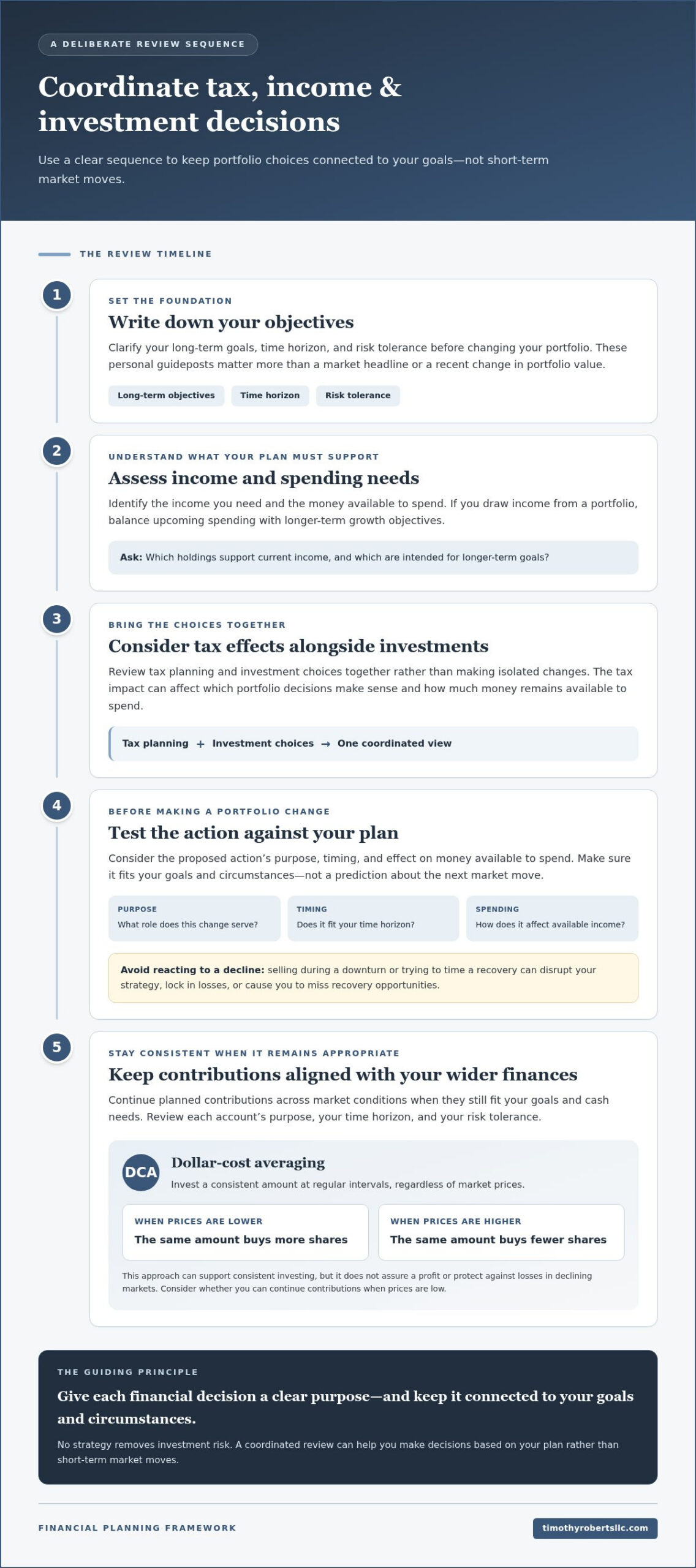
Treat taxes, income, and investments as connected decisions. When building a financial plan that survives market volatility, write down your long-term objectives, income needs, and tax considerations before changing your portfolio. Then consider each proposed investment action in light of its purpose, timing, and effect on money available to spend. This helps keep a short-term market reaction from displacing a long-term objective.
Dollar-cost averaging means investing a consistent amount at regular intervals, regardless of market prices. During volatility, that amount buys more shares when prices are lower and fewer when prices are higher. This approach can support consistent investing, but it doesn’t assure a profit or protect against losses in declining markets. Before following a regular investment plan, consider whether you can continue contributions when prices are low.
Consistency matters, but contributions should fit your wider financial picture. Continue planned contributions to retirement and investment accounts across market conditions when they remain appropriate for your goals and cash needs. Review the purpose of each account, your time horizon, and your risk tolerance. These factors, rather than a market headline or recent change in portfolio value, can guide your investment allocation.
Coordinate income planning with investment choices. For example, someone drawing income from a portfolio may need to balance upcoming spending with longer-term growth objectives. Tax considerations also affect portfolio decisions, so review tax planning and investment choices together rather than making isolated changes. This broader view can clarify which holdings support current income and which serve longer-term goals.
Follow a deliberate review sequence: confirm your goals, assess income needs, consider tax effects, then evaluate any proposed portfolio change. Keep your long-term investment strategy tied to your circumstances, not predictions about the next market move. Selling during a decline or trying to time a recovery can disrupt your strategy, lock in losses, or cause you to miss recovery opportunities. A coordinated review gives each decision a clear purpose.
2. Diversification across sectors, industries, and regions
A portfolio concentrated in one sector can be vulnerable to forces affecting that area. Diversifying across sectors, industries, and geographic regions can reduce the influence of a single market event on the overall portfolio. Diversification doesn’t eliminate investment risk or guarantee a profit, but it can reduce reliance on one source of returns.
Start with asset allocation: decide how to divide investments among categories such as equities, fixed income, and cash equivalents. Set the mix according to your goals, time horizon, and risk tolerance. Then check for concentration within each category. A portfolio can contain several investments and still be concentrated if they depend on the same industry or economic driver.
Consider an investor whose holdings are heavily weighted toward one industry. Adding exposure to other sectors may reduce the portfolio’s reliance on that industry’s performance. Geographic diversification can broaden exposure, but foreign markets also bring political, currency, economic, and market risks. Weigh those risks alongside the potential role of international holdings.
How often should you rebalance a portfolio, and what are the tax implications? Review your allocation periodically and when market movements create unintended concentration or pull it away from your objectives. Selling investments to rebalance can have tax consequences, so weigh those effects against the potential benefit of restoring your intended mix.
Use a consistent review process. Compare your current holdings with your target allocation, identify areas that have grown disproportionately, and consider whether adjustments fit your goals. Rebalancing can help restore alignment, but it doesn’t assure a profit or protect against losses in declining markets. Avoid changing your plan solely because one sector or region has recently performed well.
A well-diversified portfolio is tailored, not simply enlarged with more holdings. Assess how each investment contributes to your overall allocation and whether its risks overlap with existing positions. This helps make diversification purposeful while keeping market exposure aligned with the outcomes and risk level you can accept.
3. Cash reserves and cash flow planning
Build a monthly budget that separates essential costs, flexible spending, and planned saving. This shows how much income needs to remain available even as investments fluctuate. Review recurring expenses, upcoming commitments, and income sources together. Regular cash-flow reviews can reveal spending patterns and potential savings, helping you adjust before a shortfall forces an investment decision.
Cash reserves can provide flexibility during a downturn by reducing the need to sell investments at unfavorable times. Decide which expenses the reserve is meant to support, and keep its role distinct from money invested for longer-term objectives. For example, if portfolio values fall while regular bills continue, available cash may help cover near-term costs without requiring you to sell investments solely to raise spending money.
How can you stress-test a financial plan against market crashes, inflation, and job loss? Model each scenario by updating income, spending, investment values, and cash needs, then identify which expenses or decisions may need to change. A market decline tests your reliance on investments; inflation tests whether income keeps pace with costs; job loss tests how long available cash can support essential spending.
Start with your current monthly budget and income sources. Create a separate version for each pressure rather than assuming financial conditions will stay unchanged. Note which costs are essential, which may be reduced, and whether planned saving remains workable. Compare the results with your cash reserves and long-term projections, then identify adjustments that preserve essential expenses and financial priorities.
Revisit the plan when income, spending, or priorities change. A career shift, new family responsibility, or different spending pattern can change the role cash needs to play. Regular reviews connect daily cash flow with risk management and longer-term goals. They help you spot pressure points early and make considered adjustments rather than relying on a single market forecast or budget snapshot.
4. Financial advice during market volatility
Useful financial advice turns market movement into a disciplined review, not a prediction exercise. A financial plan connects your goals, time horizon, and comfort with risk to decisions across changing markets. During a decline, revisit those foundations before changing investments. Ask whether each holding still serves its original purpose and whether a major change in income or priorities has altered your plan.
How should you adjust retirement withdrawals during a bear market? Start by reviewing essential spending, available income sources, and the cash reserves built into your plan. Separate necessary expenses from discretionary ones, then consider whether temporary spending changes could reduce pressure on investments. Any adjustment should fit your retirement income needs and the role of each portfolio holding.
Selling investments during a downturn can lock in losses, disrupt a long-term strategy, or leave you out of a recovery. Before selling, identify the specific need the sale would meet and consider its effect on your intended allocation. A decision made solely in response to falling prices can replace a planned strategy with a reaction to current market conditions.
Use regular reviews to check whether your allocation still reflects your objectives. Periodic rebalancing can restore alignment and help prevent unintended concentration when some holdings move more than others. A review can also bring retirement planning, tax considerations, and investment management into one financial picture. A fiduciary advisor is legally bound to act in your best interest and can support disciplined decisions during volatile markets.
Bring a clear set of questions to each review: Have my goals changed? Do income needs remain aligned with my investments? Has a market move shifted my allocation? The answers help define purposeful adjustments without trying to forecast every market shift. For guidance that connects investment decisions with your broader goals, request a financial plan review.
Timothy Roberts & Associates: Retirement Income Planning
Timothy Roberts & Associates offers Retirement Income Planning to help connect retirement income decisions with investment choices as you plan through market volatility. This planning brings your income needs, portfolio, and longer-term priorities into view, especially when market declines prompt questions about withdrawals or spending.
Investment Portfolio Management can help align a portfolio with your goals and risk tolerance, while Estate & Legacy Planning and Risk Management & Insurance Analysis address other aspects of financial stability. Consider a review when retirement income needs or priorities change, or when market movements make you question whether your strategy still fits. The aim is a coordinated view of your decisions, not a prediction of every market move.
Contact Timothy Roberts & Associates to discuss Retirement Income Planning and your financial priorities.
Make Your Next Review Intentional
A durable financial strategy isn’t a document to complete and set aside. It’s a decision-making framework to revisit as your priorities, income, or responsibilities change. Choose a personal review trigger, such as a career transition or a change in family needs, and use it to consider whether your financial choices still support the life you’re building.
That steady practice is central to building a financial plan that survives market volatility. The goal isn’t to anticipate every market movement. It’s to make thoughtful adjustments when your circumstances change while keeping long-term objectives in view. A fiduciary financial professional, legally bound to act in your best interest, can help you assess how your strategy fits your evolving plans.
Start a conversation with Timothy Roberts & Associates, LLC about the next stage of your financial plan. A considered next step can help you move forward with greater clarity.
Frequently Asked Questions
What are the key steps to build a financial plan that can withstand market volatility?
A plan for building a financial plan that survives market volatility starts with clear goals, income needs, and time horizons. Map your essential expenses, identify the purpose of each investment account, and set an allocation aligned with your risk tolerance. Then decide how you’ll review the plan, including which life changes or portfolio shifts should prompt a closer look. This makes future adjustments more intentional.
How much emergency savings should I keep during market downturns?
Set your reserve with essential expenses, income reliability, household responsibilities, and access to other resources in mind. Start by reviewing your monthly budget and separating necessary costs from discretionary spending. Then consider how reduced income or unexpected expenses would affect cash flow. A reserve provides accessible funds for needs, helping you rely less on selling investments during a downturn.
How should I allocate assets based on age, goals, and risk tolerance?
Choose an allocation by weighing your time horizon, financial goals, ability to tolerate losses, and need for accessible funds. Age can inform the discussion, but it doesn’t determine the right mix on its own. For example, someone saving for a distant goal may approach market risk differently from someone relying on investments for current income. Reassess the mix when your goals or circumstances change.
How does diversification reduce investment risk during volatile markets?
Diversification spreads exposure across investments that may respond differently to market conditions. For example, holdings across several industries depend less on the outlook for any one industry than a concentrated portfolio does. Geographic diversification can broaden exposure while introducing risks tied to foreign markets. Diversification can limit the impact of a single event on the overall portfolio, but it can’t eliminate investment risk or prevent losses.
What investment fees, taxes, and account rules should I consider in the United States?
Review investment expenses, advisory or transaction charges, tax effects, and the rules attached to each account. Compare fund expenses and account-level costs, then consider how buying, selling, or receiving investment income may affect your tax situation. Contribution and withdrawal conditions vary by account type and plan documents. For instance, an employer-sponsored retirement plan may have terms that differ from those of an individual retirement account.
