

Oct
Managing Sudden Wealth From Inheritance Without Guilt
An inheritance can feel like a loss before it feels like an opportunity. Managing sudden wealth from an inheritance without guilt starts with recognizing that grief, relief, fear, and uncertainty can coexist; receiving money doesn’t erase the relationship or dictate how you should feel. Inheritance can bring six emotional stages: disbelief, anger, euphoria, guilt, paralysis, and becoming “heirworthy.” Five of these parallel the stages of grief.
If you feel uneasy about spending, keeping, or sharing an inheritance, that reaction doesn’t mean you’re handling it badly. Guilt may stem from grieving the person who died, feeling you didn’t earn the money, worrying about others’ judgments, or questioning where you belong now. These feelings can make financial decisions feel more complicated than they look on paper.
This article explores where inheritance guilt and fear of not belonging can come from, and how they may lead to hesitation, pressure to give money away, or rushed decisions. It also explains how taking time to understand your feelings can help you approach the inheritance with greater clarity and intention.
Key Takeaways
- Recognize that grief, guilt, relief, and uncertainty can coexist after an inheritance; mixed emotions don’t mean you’re making a mistake.
- Notice how fear of judgment or feeling out of place may shape your choices about using, keeping, or sharing inherited wealth.
- Explore what your guilt is connected to, such as loss, family expectations, or beliefs about deserving money, before acting on it.
- Give yourself room to reflect and define what you want the inheritance to support before making major financial decisions.
Emotional effects of sudden wealth
An inheritance can bring financial change alongside grief, uncertainty, and pressure. Recognizing these reactions can help you avoid letting one intense feeling dictate a lasting decision.
Emotional Stages of Inheritance
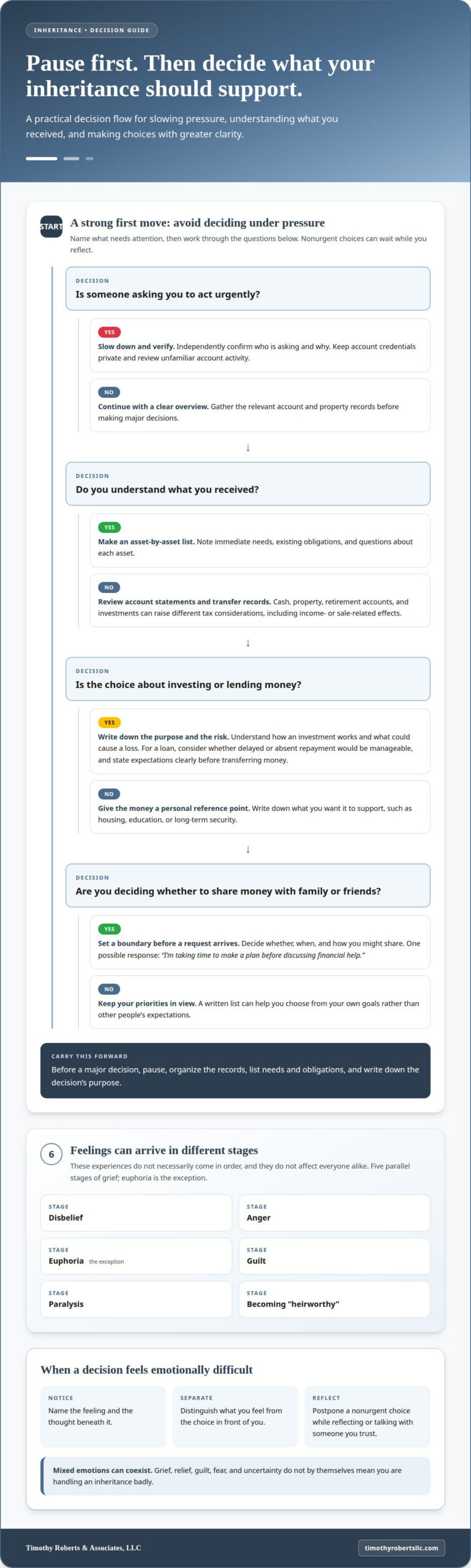
An inheritance can involve six emotional stages: disbelief, anger, euphoria, guilt, paralysis, and becoming “heirworthy.” Five parallel the five stages of grief, with euphoria as the exception. These experiences don’t necessarily come in order or affect everyone alike. Naming the stage you recognize can help explain why a practical choice, such as investing or spending, suddenly feels emotionally difficult.
Tax treatment depends on the asset. Inherited cash, property, retirement accounts, and investments can each raise different tax considerations, including income or sale-related effects. Review account statements and transfer records to understand what you received before making tax or investment decisions.
After inheriting a large sum, pause major purchases and organize relevant account and property records. List immediate needs, existing obligations, and questions about each asset. Then use that overview to shape a considered financial plan instead of making decisions under pressure.
When looking for a fee-only fiduciary financial advisor experienced with sudden wealth, ask about the advisor’s fee structure, fiduciary commitment, and experience working with inheritance recipients. Discuss how the advisor would account for your goals, risk tolerance, and different assets before deciding whether the relationship is a good fit.
Family Requests and Personal Boundaries
Personal boundaries set clear limits on whether, when, and how you share inherited money with family or friends. Decide how you’ll respond before a request arrives, for example: “I’m taking time to make a plan before discussing financial help.” A consistent boundary can protect your priorities and relationships. Some recipients feel compelled to give or donate, which can deplete funds faster than expected.
To reduce the risk of scams or financial abuse, keep account credentials private, slow down in response to urgent requests, and independently verify who is asking and why. Keep financial records and review unfamiliar account activity. If you have creditor concerns, consider how each asset is held and seek advice based on your circumstances before transferring or spending funds.
Fear of judgment and not belonging
An inheritance can change how someone sees their place in a family or community. You may worry that friends will assume you’re wealthy, expect financial help, or judge a purchase as wasteful. Those imagined reactions can make ordinary choices, such as replacing a car or taking time off, feel like public statements about your character.
Fear can also lead to decision paralysis. Some recipients avoid choosing what to do and leave inherited money idle in a low-interest account. That may feel safer than risking a visible mistake, but it postpones decisions about the inheritance’s purpose. A written list of priorities, such as housing, education, or long-term security, gives each choice a personal reference point instead of leaving it to others’ expectations.
Sudden wealth syndrome describes adjustment issues after unexpectedly acquiring significant wealth, including identity crisis, depression, and anxiety. Money may change your options without changing your sense of self or belonging. For example, someone who inherits investments may feel pressure to adopt an affluent lifestyle, even when existing routines and goals still matter. Recognizing that tension can help you distinguish financial capacity from social identity.
Investing or lending inherited money too quickly can expose it to losses, unsuitable risks, or commitments that don’t fit your goals. Some recipients pursue get-rich-quick schemes or volatile assets without sufficient financial knowledge, putting the money at risk. A family loan can also cause strain if repayment expectations are unclear or the money is needed elsewhere.
Before committing funds, write down the decision, its purpose, and what you can afford to lose or give without undermining your plans. For a proposed investment, understand how it works and what could cause a loss. For a loan, consider whether you could accept delayed or absent repayment, and state expectations clearly before transferring money. Taking these pauses makes it easier to choose based on your priorities, not fear of judgment.
Grief and guilt after receiving an inheritance
Inherited money can represent both someone’s absence and a new financial possibility. U.S. Bank describes guilt as a natural emotion that can arise after receiving an inheritance. You might feel uneasy about making a purchase because the money came from someone you miss, or feel relief alongside sadness. These reactions can coexist without meaning you’re disrespecting the person who died.
To manage guilt, grief, or anxiety, identify the thought beneath the feeling and write it down. For example, “I shouldn’t benefit from this loss” may point to grief, while “my family will judge me” may point to fear of others’ expectations. Then separate what you feel from the decision in front of you. You can postpone a nonurgent financial choice while reflecting or talking with someone you trust.
U.S. Bank advises people experiencing inheritance guilt to examine where it comes from and consider the opportunities inherited wealth provides. That reflection can turn general shame into a specific concern: perhaps you feel undeserving, worry that spending the money will dishonor the giver, or feel pressure to share it. Naming the source helps you decide whether to reflect personally, have a family conversation, or make a financial plan.
According to U.S. Bank, unexamined inheritance guilt may persist for years or a lifetime. That doesn’t mean you must force yourself to feel grateful or give the money meaning immediately. Instead, consider what the person intended, what you need now, and what you hope the inheritance can support. A thoughtful choice might preserve funds for future security, help meet a personal goal, or support a cause you value. Your decision can honor your circumstances as well as your relationship with the person who left the inheritance.
Sources of guilt about inherited wealth
Guilt often attaches to what an inheritance represents, not simply its balance. Someone may think, “I benefited because a person died,” while understanding that the loss wasn’t their choice. Managing sudden wealth from inheritance without guilt starts with separating the inheritance’s origin from your responsibility for using it. That distinction can clarify what you’re actually judging.
Another source of guilt is the belief that money must be earned to be deserved. For example, an heir with a modest career may feel uncomfortable owning assets they didn’t create. Ask what “deserving” means in that thought. Did the person leave the inheritance to support your future, or are you applying a rule that every benefit requires personal sacrifice?
Family roles can add another layer. A sibling who receives less, or a relative who expects financial help, may leave you feeling disloyal for protecting your own plans. Separate the emotional concern from the practical decision: what relationship do you want to preserve, and what financial commitment can you genuinely sustain? Clear limits can show care without turning guilt into an open-ended obligation.
Guilt can also arise when your choices differ from what you imagine the deceased would have wanted. You might hesitate to use inherited funds for education, a home, or a career change because the purpose feels uncertain. Write down what you know about the person’s values, then distinguish those memories from assumptions. Managing sudden wealth from inheritance without guilt doesn’t mean treating the inheritance as a test of loyalty. Thoughtful use can reflect your needs and values.
Try naming the source before deciding what to do: grief, fairness, deservingness, family pressure, or uncertainty about the person’s wishes. That distinction turns a diffuse feeling into a question you can examine. If you’re ready to connect your inheritance with your broader priorities, explore a more intentional approach to inherited wealth.
Timothy Roberts & Associates: Retirement Income Planning
Timothy Roberts & Associates offers Retirement Income Planning to help connect an inheritance with your long-term financial priorities. If inherited assets affect your retirement timeline, income needs, or investment decisions, a coordinated plan can bring those considerations into focus without requiring an immediate decision about every dollar.
Investment Portfolio Management can help you consider how inherited investments fit your broader portfolio, while Estate & Legacy Planning can help align wealth decisions with the legacy you want to shape. The right starting point depends on what you inherited and what you want the money to support. Bring your goals and questions to a conversation, then consider which planning areas deserve attention first.
Contact Timothy Roberts & Associates to discuss planning for your inheritance.
Let Your Next Decision Reflect Your Values
The next step doesn’t need to be a grand gesture. Choose one decision you can make thoughtfully, such as setting a personal priority for the inheritance or deciding what questions you want answered before investing. That small act can make managing sudden wealth from inheritance without guilt a process shaped by your values, not pressure to prove what you deserve.
When financial choices are connected, planning can help you consider them together. Timothy Roberts & Associates, LLC offers Retirement Income Planning, Investment Portfolio Management, and Estate & Legacy Planning to support decisions about income, investments, and the legacy you want to shape.
For a conversation about your financial priorities and possible next steps, contact Timothy Roberts & Associates, LLC. You can move forward at a pace that gives both your feelings and your financial plans room to be considered.
Frequently Asked Questions
How long should I wait before making major financial decisions after an inheritance?
Wait until you understand the inheritance and can consider a major choice without feeling rushed. There’s no single waiting period that suits every situation: urgency, grief, and the complexity of the assets all matter. You can organize account information and identify immediate obligations while postponing a home purchase or investment commitment until you’ve assessed its long-term effect.
How should I create a plan for spending, saving, investing, and giving inherited wealth?
Build a plan around your needs, priorities, and the role each part of the inheritance should play. Separate near-term expenses from money intended for future goals, then consider investments in light of your time horizon and comfort with risk. If giving matters to you, choose an amount or approach that fits alongside those priorities, rather than making open-ended commitments under pressure.
How can I honor the person who left me an inheritance without feeling obligated to spend it a certain way?
Honor the person by connecting your choices to what mattered in your relationship, rather than assuming there’s one required use for the inheritance. You might preserve a meaningful object, support a cause they cared about, or use the funds toward a goal that reflects your own life. A private note about why you chose that purpose can make the decision feel intentional, not imposed.
